A booth rental agreement is a binding commercial lease between a salon owner and an independent beauty professional that defines the terms under which a licensed professional rents a workstation inside your facility. Get this document wrong and you risk misclassification audits, insurance gaps, and client-ownership disputes that can unravel a rental relationship in weeks.
Every solid booth rental agreement covers six non-negotiable elements:
- Rent and pricing model (flat, percentage, or hybrid)
- Lease term and renewal conditions (month-to-month, weekly, or fixed)
- Utilities and shared facilities (what’s included, who cleans what)
- Insurance and liability (who carries what coverage and who is named as additional insured)
- Client ownership and signage (renter keeps their client list; salon sets conduct standards)
- Termination and dispute resolution (notice periods, mediation or arbitration clause)
Next step: Download a template from a reputable source, collect the renter’s state license and proof of insurance, then have a local attorney review the final draft before anyone signs.
Key Takeaways
A solid booth rental agreement protects both parties by being specific about the facility, the payment terms, and the renter’s autonomy — and vague agreements are the primary source of disputes.
| Point | Details |
|---|---|
| Six must-have clauses | Every agreement needs rent, lease term, utilities, insurance, client ownership, and termination language before anyone signs. |
| IC risk starts with control | Requiring specific products, mandated hours, or price approval pushes a renter toward employee status under IRS classification tests. |
| Flat rent is the safest model | A fixed weekly or monthly rent keeps the owner out of the renter’s revenue and reduces misclassification exposure compared to percentage-of-gross arrangements. |
| Verify before occupancy | Check the renter’s state license through the board’s online lookup and collect a current insurance certificate before the first day. |
| Lumaripro for operations | Lumaripro’s platform connects to POS and QuickBooks to track rent, manage onboarding, and provide financial dashboards for rental-based salons. |
Table of Contents
- What is a booth rental agreement and who needs one?
- What clauses does a booth rental agreement need?
- How do you set rent: flat, percentage, or hybrid?
- What IC classification risks should your contract avoid?
- How do you draft, screen a renter, and sign the agreement?
- What are the tax and 1099 rules for booth rental income?
- What state-specific rules affect your booth rental contract?
- What should your booth rental template checklist include?
- What mistakes and red flags should you watch for?
- What the best booth rental relationships actually look like
- Lumaripro helps you run the business side of booth rentals
- Useful resources to consult
- Sources
What is a booth rental agreement and who needs one?
A booth rental agreement is a commercial lease for a workstation. The salon owner acts as landlord; the beauty professional acts as a commercial tenant. That legal character matters because it shapes everything from tax treatment to liability exposure. eForms describes it as a document that assigns booth location, rent schedule, equipment responsibilities, and governing law.
Typical renters include hairstylists, barbers, estheticians, nail technicians, massage therapists, and makeup artists. Every one of them must hold an active state-issued license to practice legally. The Bureau of Labor Statistics tracks this workforce across hundreds of thousands of practitioners nationwide, which gives you a sense of how common these arrangements are.
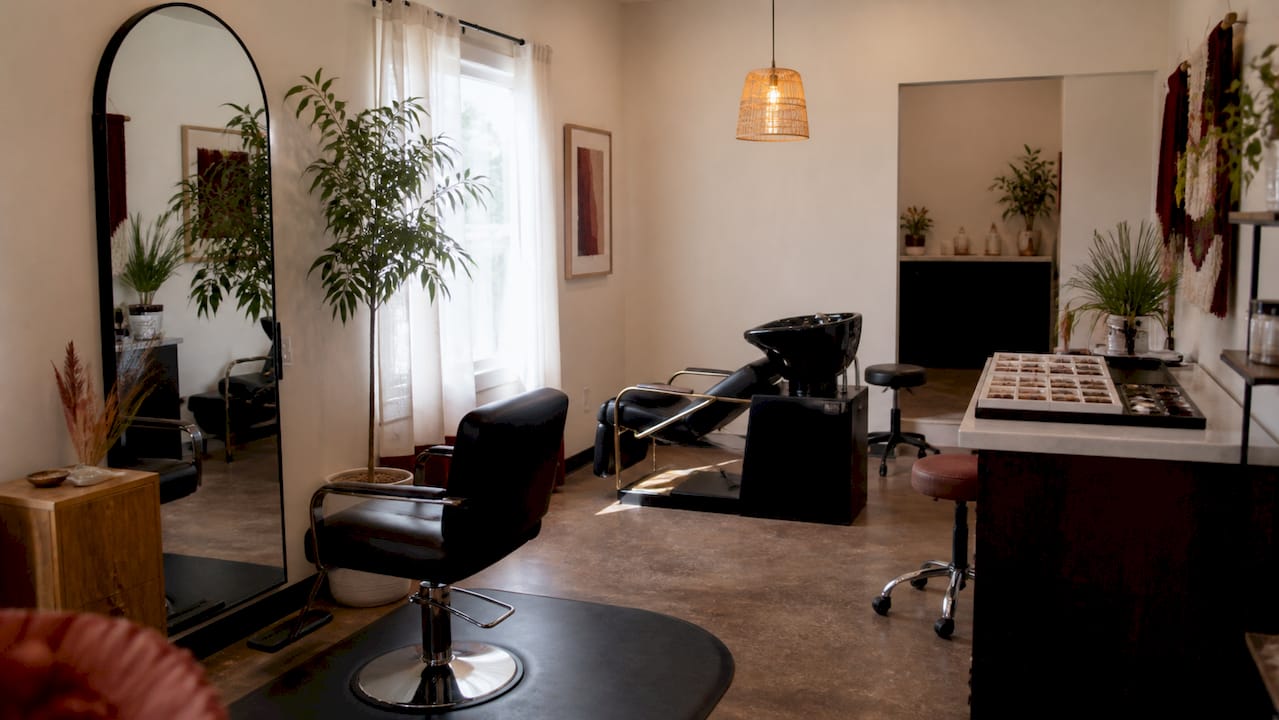
Physical setups vary widely. A single chair in an open-floor salon is the most common configuration. Dual stations, private suites inside a larger salon, and shared open-floor booths each change what “included amenities” means in practice. A private suite renter may have exclusive access to a shampoo bowl and color station; a shared-floor renter may split backbar space with two other stylists. Whatever the setup, the agreement needs to name it precisely.
What clauses does a booth rental agreement need?
A defensible booth rent contract covers more ground than most first-time drafters expect. Here is a clause-by-clause breakdown with short sample language you can adapt.
- Parties and premises. “This agreement is between [Owner Name], owner of [Salon Name] located at [Address], and [Renter Name], a licensed [cosmetologist/esthetician/barber] holding License No. [XXXXX].”
- Description of booth. “Renter is granted exclusive use of Station No. 3, located in the northwest corner of the salon floor, including one styling chair, one mirror, and one rolling cart.”
- Rent and pricing model. “Renter agrees to pay a flat weekly rent of $[Amount] due every Monday by 5:00 PM.”
- Payment schedule and late fees. “Payments received after the due date are subject to a late fee of $[Amount] per day, not to exceed $[Cap].”
- Security deposit. “Renter shall pay a security deposit of $[Amount] upon signing, refundable within 14 days of lease termination less any documented damages.”
- Returned check penalty. “Returned checks incur a $[Amount] fee; two returned checks in any 12-month period constitute grounds for termination.”
- Lease term and renewal. “This lease commences on [Date] and continues on a month-to-month basis unless either party provides 30 days’ written notice of non-renewal.”
- Access hours. “Renter may access the premises Monday through Saturday, 8:00 AM to 8:00 PM. After-hours access requires prior written approval.”
- Shared facilities and responsibilities. “Renter has shared access to shampoo bowls, color mixing station, backbar, and Wi-Fi. Renter is responsible for cleaning their station after each client and for weekly cleaning of any shared shampoo bowl used.”
- Maintenance and sanitation. “Renter agrees to comply with all applicable state cosmetology board sanitation standards and OSHA workplace safety requirements at all times.”
- Equipment provided. “Owner provides: one styling chair, one mirror, one rolling cart, and access to the salon’s Wi-Fi network. Renter provides all personal tools, products, and supplies.”
- Insurance and indemnity. “Renter shall maintain general liability insurance of no less than $1,000,000 per occurrence and professional liability insurance, naming [Salon Name] as an additional insured. Renter shall indemnify Owner against claims arising from Renter’s services.”
- Client ownership. “Renter retains full ownership of their client list and contact data. Owner may require adherence to appointment-booking standards and professional conduct policies but makes no claim to Renter’s clients.”
- Permitted services. “Renter is authorized to perform the following services: [list]. Any service outside this list requires prior written approval.”
- Non-solicitation and confidentiality. “For 12 months following termination, Renter agrees not to solicit Owner’s employed staff. Renter shall keep salon pricing, vendor relationships, and operational processes confidential.”
- Termination and notice. “Either party may terminate this agreement with 30 days’ written notice. Owner may terminate immediately for non-payment, license lapse, or material breach.”
- Dispute resolution. “Any dispute arising under this agreement shall first be submitted to mediation before either party may pursue litigation.”
- Governing law. “This agreement is governed by the laws of the State of [State].”
Pro Tip: Include a clause explicitly stating that the renter operates as an independent contractor, sets their own prices, schedules their own clients, and uses their own methods. This language, reviewed by a tax attorney, is your first line of defense in an IRS audit.
How do you set rent: flat, percentage, or hybrid?
Pricing structure is one of the most consequential decisions in a booth rent contract. Each model carries different financial and compliance implications.
Flat rent is the most common and the cleanest from a compliance standpoint. The renter pays a fixed weekly or monthly amount regardless of how much they earn. Predictable for both sides, easy to track, and it does not require the owner to monitor the renter’s revenue.
Percentage of gross ties the owner’s income to the renter’s production. On a busy week, the owner earns more. On a slow week, less. The problem is that collecting a percentage of gross almost always requires the owner to track the renter’s sales, which can look like control over the renter’s business. That creates independent contractor misclassification risk that a flat-rent model avoids entirely.
Hybrid models combine a lower base rent with a small percentage kicker above a revenue threshold. They can work, but they require careful drafting and a clear audit trail.
For setting a starting flat rent, a practical affordability check: target rent should generally not exceed 30–40% of the renter’s projected average weekly gross. If a stylist expects to gross $1,000 per week, a rent above $300–$400 leaves little margin for supplies, taxes, and slow weeks. That range is a starting point, not a rule. Actual market rates vary significantly by city, neighborhood, and service mix. Check what comparable stations rent for locally before setting your number.
| Pricing model | How it works | Owner income stability | IC risk level | Best for |
|---|---|---|---|---|
| Flat weekly/monthly rent | Fixed amount due on a set day | High | Low | Most salon setups |
| Percentage of gross | Owner takes a cut of renter’s revenue | Variable | Higher (requires revenue monitoring) | High-volume renters with variable weeks |
| Hybrid (base + percentage) | Low base rent plus percentage above a threshold | Moderate | Moderate (requires careful drafting) | Experienced renters with predictable volume |
What IC classification risks should your contract avoid?
Misclassification is the legal exposure most salon owners underestimate. If the IRS or a state labor agency determines that your “independent contractor” renter is actually an employee, you face back payroll taxes, penalties, and potential benefits liability. The IRS guidance on worker classification outlines the behavioral, financial, and type-of-relationship factors examiners use.
The core principle: a true independent contractor controls how they do their work. The owner controls only the result (a clean, professional environment) and the facility terms.
Behaviors that preserve IC status:
- Renter sets their own prices and service menu
- Renter schedules their own clients without owner approval
- Renter uses their own tools and products
- Renter is free to work at other locations
- Owner does not require attendance at staff meetings or training
Behaviors that create employee-like control:
- Requiring renters to use salon-branded products or attend mandatory sales training
- Setting the renter’s prices or requiring price approval
- Mandating specific work hours or minimum hours per week
- Controlling client assignment or booking
- Requiring participation in salon promotions
| Owner action | IC-safe | Creates employee risk |
|---|---|---|
| Require state license and insurance | Yes | No |
| Set facility access hours | Yes | No |
| Require sanitation standard compliance | Yes | No |
| Mandate specific product brands | No | Yes |
| Approve renter’s service prices | No | Yes |
| Require minimum hours on-site | No | Yes |
| Assign clients to renter | No | Yes |
Use neutral “facility provider” language throughout the agreement. Avoid phrases like “staff,” “employee handbook,” or “required attendance.” When a clause feels borderline, consult a tax attorney or CPA before finalizing it.
How do you draft, screen a renter, and sign the agreement?
The operational sequence matters as much as the contract language. A well-drafted agreement signed with the wrong renter still creates problems.
- Prepare your template. Start with a reputable source such as eForms or FreeForms, then customize it for your state, your facility, and your specific booth setup. Have a local attorney review the draft before you use it with anyone.
- Post or recruit. List the available station on professional networks, beauty school job boards, or local stylist groups. Describe the booth setup, included amenities, rent, and access hours clearly upfront.
- Screen applicants. Ask for a portfolio or social media links, a brief description of their current client base, and their license number so you can verify it before the interview.
- Verify licenses and insurance. Check the applicant’s cosmetology or barber license directly through your state board’s online lookup. Require a current certificate of insurance before occupancy, not after.
- Negotiate rent and terms. Agree on the pricing model, what’s included, notice periods, cleaning responsibilities, and shared-space calendars. Put every agreed point in writing.
- Sign and collect. Both parties sign the agreement. Collect the first rent payment and security deposit at signing. Never let a renter occupy the booth before payment clears.
- File and track. Keep a signed copy, the renter’s W-9, their license copy, and their insurance certificate in a dedicated file. Set a calendar reminder to verify license renewal annually.
Documents to collect before occupancy:
- Current state cosmetology, barber, or esthetician license (copy)
- Certificate of general liability and professional liability insurance
- Completed IRS Form W-9
- Proof of business registration or EIN, if applicable
- References from prior salon owners or landlords
- Portfolio or social media links for service verification
Document.com and similar services emphasize collecting license numbers, tax IDs, and proof of insurance as part of the onboarding process. That paperwork protects you before the first client sits in the chair.
What are the tax and 1099 rules for booth rental income?
Tax treatment for booth rental arrangements trips up both owners and renters. The IRS distinction matters here.
For owners: When a renter pays you rent for a booth, that income is generally rental income, not service income. You typically do not issue a 1099-NEC to a renter for rent payments. However, if you pay a renter for services they perform for you (a different arrangement entirely), 1099-NEC rules apply. Consult IRS guidance and a CPA to confirm how your specific arrangement is classified.
Owner bookkeeping checklist:
- Rent ledger with payment dates, amounts, and method for each renter
- Security deposit records (held separately from operating funds)
- Copies of all renter W-9s
- Copies of renter insurance certificates (updated annually)
- Signed copies of all rental agreements
- Receipts for shared utility allocations (if you split costs)
For renters: You are running a self-employed business. That means tracking every dollar in and every dollar out.
Renter bookkeeping checklist:
- Weekly income log by client or service
- Expense categories: supplies, retail products, continuing education, booth rent, professional liability insurance premiums
- Receipts for all business purchases
- Separate business bank account (mixing personal and business funds is the most common bookkeeping mistake)
- Quarterly estimated tax payments to avoid underpayment penalties
Pro Tip: Renters should set aside roughly 25–30% of gross income for federal and state self-employment taxes. That number varies by state and income level. A CPA familiar with beauty industry clients can give you a precise figure.
What state-specific rules affect your booth rental contract?
State law governs more of your booth rental agreement than most owners realize. Cosmetology and barber boards set establishment licensing requirements, sanitation standards, and in some states, specific rules about what a booth rental arrangement must include.
Before finalizing any salon booth rental agreement, check your state cosmetology or barber board for:
- Establishment license requirements (some states require a separate license for each booth renter’s workstation)
- Sanitation and disinfection standards that must be met at the booth level
- Permitted services by license type (an esthetician license does not authorize the same services as a cosmetology license in most states)
- Any state-specific language required in rental agreements
Beyond licensing, several states apply stricter independent contractor tests than the federal IRS standard. California’s ABC test, for example, is significantly harder to satisfy than the IRS common-law test. If you operate in a state with aggressive IC enforcement, your contract language needs to reflect that. A state-licensed employment attorney is worth the consultation fee.
Include a clause in every agreement that reads something like: “Renter warrants that they hold a current, active [State] [license type] license and agrees to maintain that license for the duration of this agreement. Lapse of required licensure constitutes grounds for immediate termination.”
Pro Tip: State cosmetology board websites are public. Bookmark your state’s license lookup page and check every renter’s license status at signing and annually at renewal. An expired license is your liability if you allowed the renter to practice.
What should your booth rental template checklist include?
Use this checklist when drafting or reviewing any booth rent contract template. Every item should be addressed before signing.
Agreement checklist:
- [ ] Full legal names and addresses of both parties
- [ ] Booth number, location, and physical description
- [ ] Rent amount, due date, and payment method
- [ ] Late fee amount and grace period
- [ ] Security deposit amount and refund conditions
- [ ] Returned check penalty
- [ ] Lease start date and term (fixed, month-to-month, or week-to-week)
- [ ] Renewal and non-renewal notice period (typically 30 days)
- [ ] Access hours and after-hours policy
- [ ] List of included equipment and shared facilities
- [ ] Cleaning and maintenance responsibilities (booth and shared spaces)
- [ ] Sanitation compliance requirement (state board standards)
- [ ] Insurance requirements (general liability + professional liability, with certificate)
- [ ] Indemnification clause
- [ ] Client ownership statement (renter retains client list)
- [ ] Permitted services list
- [ ] Independent contractor status language
- [ ] Non-solicitation clause (time-limited, geographically specific)
- [ ] Confidentiality clause
- [ ] Termination conditions and notice period
- [ ] Dispute resolution clause (mediation before litigation)
- [ ] Governing law (state)
- [ ] Signature lines with dates
Sample clause snippets you can adapt:
Rent payment: “Renter shall pay $[Amount] per week, due each Monday by 5:00 PM, via [payment method]. Payments received after 5:00 PM on the due date are subject to a late fee of $[Amount].”
Client ownership: “Renter retains exclusive ownership of their client list, contact information, and client relationships. Owner shall not use, share, or claim any interest in Renter’s client data.”
Shared facilities: “Renter has shared access to the following: [shampoo bowl No. 2, backbar station, color mixing area, Wi-Fi]. Renter is responsible for cleaning shared equipment after each use and for their designated station after each client.”
Termination notice: “Either party may terminate this agreement by providing 30 days’ written notice delivered by email or certified mail to the address listed above.”
Insurance requirement: “Renter shall maintain, at their own expense, general liability insurance of at least $1,000,000 per occurrence and professional liability (errors and omissions) insurance. A current certificate of insurance naming [Salon Name] as an additional insured must be on file before occupancy begins.”
Templates from sources like eForms and PandaDoc provide solid starting frameworks. Treat any downloaded template as a first draft, not a finished document. A state-licensed attorney should review the final version before you use it.
Booth rental disputes are almost always about something the agreement didn’t say clearly. Specificity in your template is the cheapest legal protection you can buy.
What mistakes and red flags should you watch for?
Most booth rental disputes trace back to a handful of predictable errors. Knowing them in advance is cheaper than fixing them after the fact.
- Over-control of the renter’s work. Requiring specific products, mandating hours, or approving prices all push toward employee status. Review every clause through the lens of the IRS classification factors before signing. Mitigation: strip any language that controls method, schedule, or pricing.
- Missing or expired insurance. Allowing a renter to occupy the booth without a current certificate of insurance is one of the most common and costly oversights. Mitigation: require the certificate before the first day and set an annual renewal reminder.
- Vague client ownership language. “The salon retains all client relationships” is a clause that will generate a dispute the moment a renter leaves. Mitigation: state explicitly that the renter owns their client list and contact data.
- No termination notice period. Without a defined notice period, either party can leave or be removed with no warning. Mitigation: specify 30 days’ written notice for standard termination and immediate termination conditions for material breach.
- No dispute resolution clause. Litigation is expensive and slow. Without a mediation or arbitration clause, a disagreement over a $200 deposit can cost both parties thousands. Mitigation: add a mediation-first clause before any litigation right.
- Broad non-compete clauses. A clause that prohibits a renter from working anywhere in the city for two years after leaving is likely unenforceable and may create goodwill problems. Mitigation: limit non-solicitation to current salon staff, with a 12-month window.
- No license verification at signing. Assuming the renter holds a valid license without checking is a liability. Mitigation: verify through the state board’s online lookup and keep a copy of the license on file.
What the best booth rental relationships actually look like
The agreements that hold up longest share one quality: they are specific about the facility and silent about the work. The owner defines the space, the hours, the sanitation standard, and the payment terms. The renter controls everything else.
The flat-rent model earns its popularity for a reason. It keeps the owner out of the renter’s revenue, which is exactly where an owner should not be. A percentage-of-gross arrangement can look attractive when a renter is producing strong numbers, but it pulls the owner into monitoring sales, which is the first step toward the kind of control that triggers a misclassification claim.
On screening: the owners who avoid the most problems are the ones who verify the license before the conversation gets serious, not after. A renter with a lapsed license is not a renter. That check takes two minutes on your state board’s website.
The non-compete question comes up constantly. A narrow non-solicitation clause protecting your employed staff for 12 months is reasonable and generally enforceable. A broad clause trying to prevent a renter from working within 10 miles for three years is almost certainly not, and it signals to the renter that you do not understand the independent contractor relationship you are entering. Keep it narrow, keep it specific, and have a local attorney confirm it fits your state’s enforcement standards.
One practical tradeoff worth naming: a lower flat rent attracts more applicants and reduces turnover, which matters more than squeezing maximum rent from a single renter who leaves in three months. Stability in your rental roster is a real financial asset.
Lumaripro helps you run the business side of booth rentals
Running a rental-based salon means managing more than the agreement itself. Once the contract is signed, the real work is tracking rent, onboarding renters efficiently, and keeping your financials clear enough to make smart decisions.
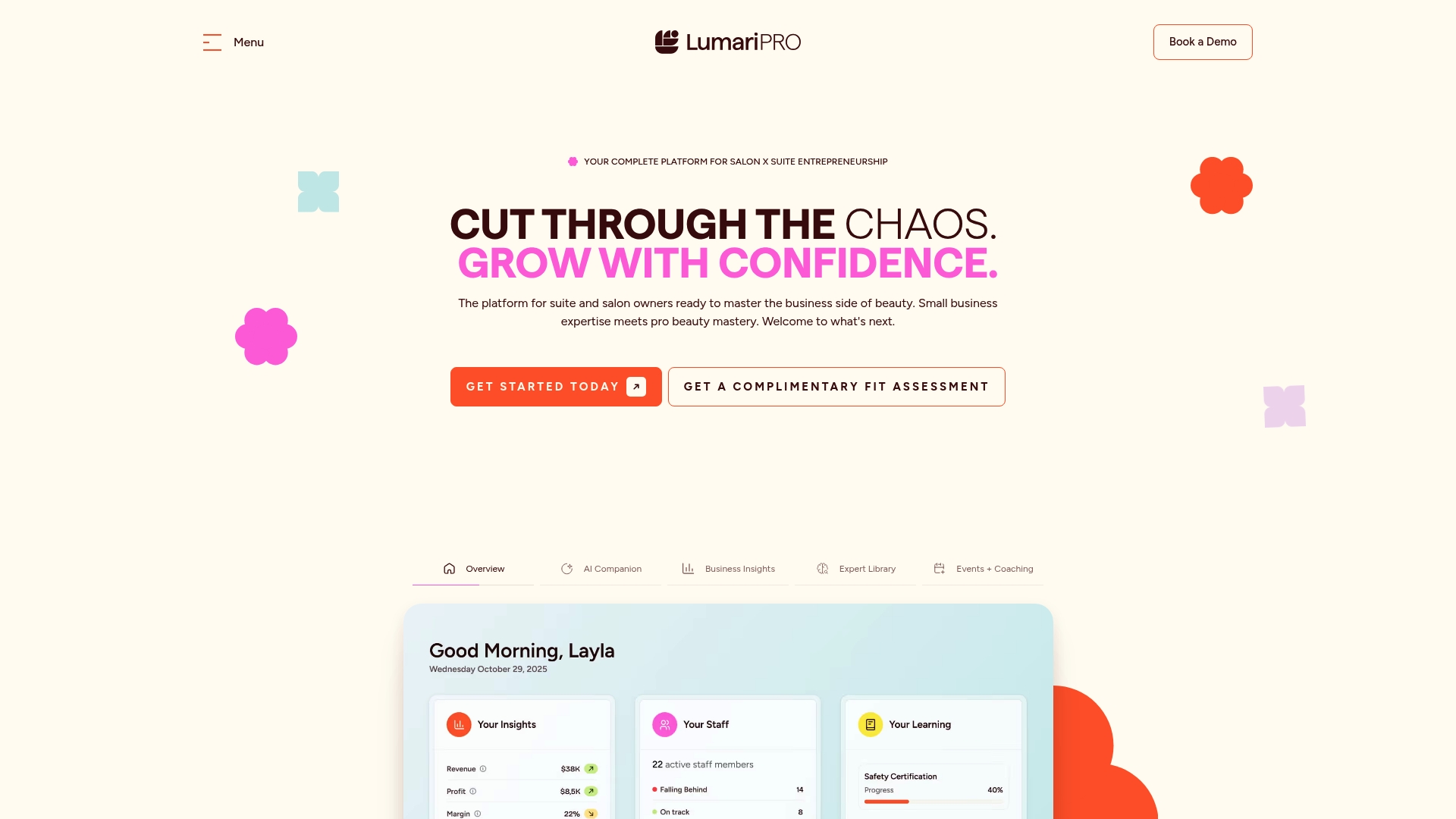
Lumaripro is built for exactly this. The platform connects to your POS and QuickBooks, so your rent ledger, renter payments, and expense tracking live in one place instead of scattered across spreadsheets. Onboarding checklists, business playbooks, and real-time financial dashboards give you the operational clarity that a contract alone cannot provide. It is not legal advice, and it does not replace your attorney. What it replaces is the guesswork in running the business around your rental agreements.
If you are ready to get your booth rental operations organized, see how Lumaripro supports salon owners with the tools and coaching to manage renters, track performance, and grow on your terms.
Useful resources to consult
These authoritative sources cover licensing, tax classification, workplace safety, and template starting points.
- IRS: Independent Contractor or Employee? The primary federal reference for worker classification tests and factors. IRS guidance
- Bureau of Labor Statistics: Barbers, Hairstylists, and Cosmetologists. Workforce data and occupational outlook for the beauty industry. BLS Occupational Outlook
- OSHA: Workplace Safety Standards. Relevant for chemical handling, ventilation, and salon safety compliance. OSHA regulations
- U.S. Small Business Administration (SBA). Operational guidance for contracts, bookkeeping, and small-business setup. SBA resources
- Your state cosmetology or barber board. The definitive source for establishment licensing, sanitation standards, and license verification. Search “[Your State] cosmetology board” for the official site.
- Template sources for first drafts: eForms, LegalTemplates, PandaDoc, and FreeForms all offer starting frameworks. Use them as drafts, not finished documents, and have a state-licensed attorney review before use.
This article provides general information about booth rental agreements and is not legal or tax advice. Consult a licensed attorney and a CPA for guidance specific to your state and business situation.
This article is general information, not a substitute for advice from a qualified lawyer. Consult a qualified legal professional about your own circumstances before acting on anything here.
Sources
- Free Salon Booth Rental Agreement Template | PDF & Word
- Independent Contractor (Self-Employed) or Employee? | IRS
- Barbers, Hairstylists, and Cosmetologists - Occupational Outlook Handbook | BLS
Recommended