Fix four systems and you will cut turnover: pay clarity, visible career paths, fair scheduling, and regular one-on-ones with a manager who actually shows up. Salon staff retention rarely improves because of a bonus check or a pep talk. It improves when stylists can see how they get paid, how they get promoted, and how they get a life outside the chair. The rest of this guide walks through a 30/60/90-day plan to make that happen.
TL;DR:
- Clear pay structures, defined career paths, and transparent scheduling rules are essential to prevent silent resentment and reduce turnover.
- Structuring onboarding and promotion criteria over 90 days fosters engagement and long-term loyalty among stylists.
- Regular, consistent communication through one-on-one meetings helps identify early signs of disengagement or burnout before stylists leave.
- Monitoring key metrics such as 90-day retention, rebooking rates, and average tenure enables targeted fixes for persistent retention problems.
- Implementing supportive mental health and inclusive culture practices lowers burnout and helps retain skilled staff in a competitive environment.
Table of Contents
- Key Takeaways for Improving Salon Staff Retention
- Why Salon Staff Retention Affects Your Bottom Line
- What Causes Stylists to Leave Salons?
- How to Build a Salon Retention System That Works
- Your 30/60/90-Day Plan for Stronger Salon Staff Retention
- How Should Managers Talk to Staff About Problems?
- What Engagement Actually Looks Like in a Salon
- Building an Inclusive Culture That Keeps Stylists Longer
- What Exit Interviews Reveal About Salon Staff Retention
- Supporting Mental Health in a High-Pressure Salon Environment
- What Most Salon Owners Get Wrong About Keeping Staff
- Turning This Plan Into a System With LumariPRO
- Sources
- FAQ
Key Takeaways for Improving Salon Staff Retention
Most turnover in a salon is preventable, not inevitable. It comes from stacked, fixable problems: unclear pay, no growth path, chaotic schedules, and managers who never sit down with their team.
- Audit pay structure and schedules first. These two issues drive the most silent resentment before anyone quits.
- Fund education and promotion paths. Stylists who see a route to advance stay longer than those chasing occasional raises.
- Track 90-day and 12-month retention alongside rebooking rates. These numbers tell you if a fix is actually working.
- Run weekly one-on-ones, even five minutes. Consistency beats grand gestures.
- Treat onboarding as a 90-day program, not a single orientation day.
Why Salon Staff Retention Affects Your Bottom Line
Losing a stylist costs more than the job posting suggests. Recruiting, training, and the empty-chair revenue gap during a transition period add up fast, and a senior stylist walking out the door often means losing their book of clients too. Average tenure for beauty professionals is moderate, typically a few years, and replacing a senior stylist can cost months of lost revenue plus recruitment and training expense.
The math owners underestimate: a departing stylist rarely leaves alone. Loyal clients often follow them, and remaining staff absorb the scheduling chaos while a chair sits empty, making Salon SEO Services critical to maintaining booking stability in your salon. That instability shows up in morale, in booking gaps, and eventually in your growth plans, since you can’t open a second suite or extend hours with a revolving door of talent behind the front desk.
The MIT Sloan Management Review makes the case plainly: counteroffers and one-time raises rarely fix the underlying reasons someone was ready to leave. Systems that remove the actual barriers to staying work better than reactive pay bumps.
What Causes Stylists to Leave Salons?
Turnover usually traces back to a handful of repeat offenders, and most are visible if you know where to look.
- Career stagnation. No defined path from junior to senior to lead stylist, and no criteria for how someone gets there.
- Pay secrecy and confusing commission math. When stylists can’t predict their own paycheck, trust erodes fast.
- Management quality and favoritism. Unresolved conflicts, uneven scheduling perks, and a manager who plays favorites push out your best people first.
- Scheduling rigidity. Back-to-back bookings with no recovery time and inflexible days off signal burnout risk before anyone says a word.
- Weak onboarding. A new hire who doesn’t get a real ramp-up plan often disengages within the first 30 days, long before they formally quit.
Watch for early warning signs: declining rebooking rates for a specific stylist, more no-shows to team meetings, and quieter one-on-ones. Silence is often the first symptom, not a rare complaint.
How to Build a Salon Retention System That Works
Fixing turnover means building systems stylists can trust, not adding another perk. Here’s how to structure the eight levers that matter most.
1. Build tiered career paths with real criteria. Define junior, senior, and lead stylist tiers with measurable requirements: client retention rate, revenue per hour, or completed certifications. Attach an education budget to each tier so advancement isn’t just a title change but a funded skill upgrade. Paid education, treated as compensation rather than a bonus, ranks highly in what keeps stylists loyal.
2. Make commission structures transparent. Publish the commission ladder with clear percentages at each revenue threshold, scaling upwards after hitting benchmarks and explain the math in plain language during onboarding. Schedule compensation reviews twice a year, not only when someone threatens to leave. Use BLS wage data for your region to confirm your rates are competitive before a stylist finds out elsewhere.
3. Build scheduling rules that protect energy, not just bookings. Post rosters two to three weeks in advance, build in buffer time between services, and cap consecutive high-intensity days. Scheduling autonomy and enforced breaks are among the simplest levers for cutting burnout-driven turnover.
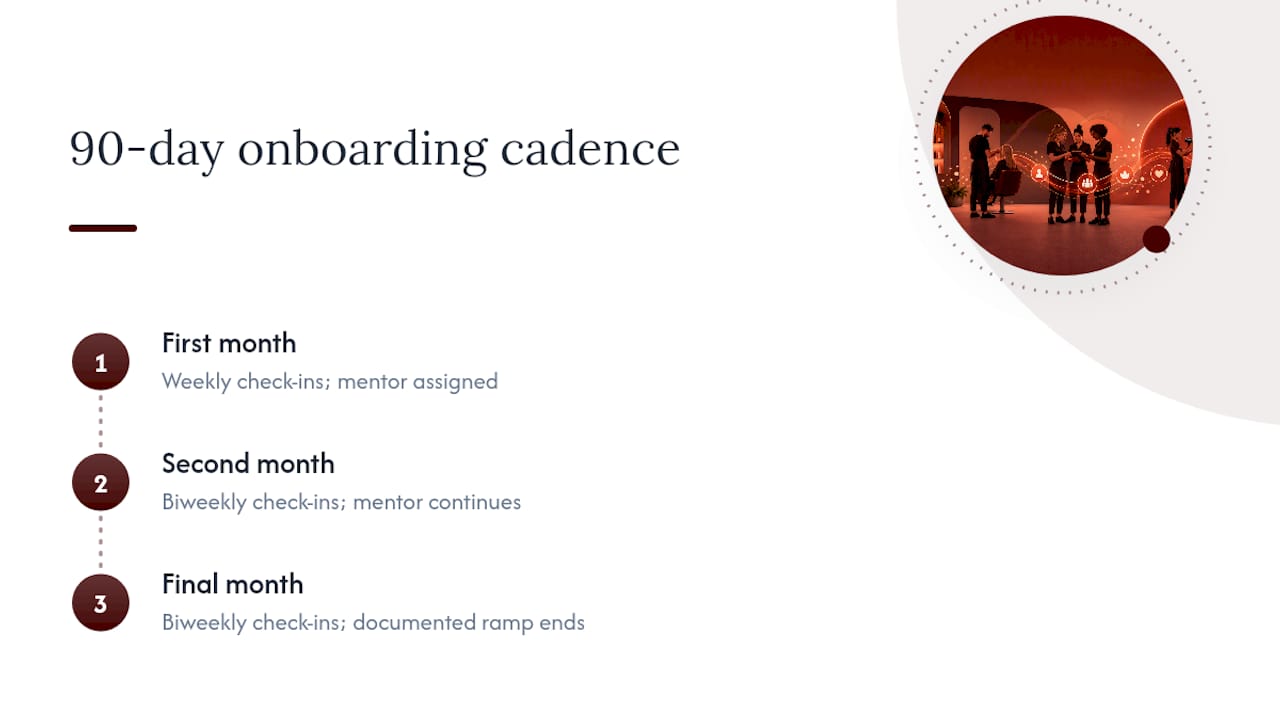
4. Run a structured 90-day onboarding program. Assign a mentor, set weekly check-ins for the first month, then biweekly through day 90. A documented ramp reduces the early disengagement that quietly precedes a resignation.
5. Recognize contribution in ways stylists actually notice. Spot bonuses for hitting rebooking targets, public shoutouts in team meetings, and a visible client-feedback board work better than an annual award nobody remembers.
6. Prevent burnout with real limits. Track hours worked against PTO taken, enforce lunch breaks, and flag any stylist averaging more than a set number of back-to-back services without a gap.
7. Confirm worker classification before it becomes a liability. Booth renters, commission employees, and W-2 staff carry different legal obligations. Misclassifying a worker can trigger back pay, tax penalties, and fines, so check your setup against DOL guidance directly.
8. Track the numbers that actually predict retention. Monitor 90-day retention, rebooking rate, monthly churn, and average tenure. If a metric stalls, that’s your signal to revisit pay, schedule, or manager quality before losing the stylist.
Pro Tip: Run your commission ladder past a spreadsheet with real numbers from your last three stylists. If even you find it hard to explain in under a minute, your team can’t trust it either.
Your 30/60/90-Day Plan for Stronger Salon Staff Retention
Turning these tactics into a functioning system takes roughly three months of deliberate rollout.
- Days 0 to 30: Audit current pay structures and posted schedules for inconsistencies. Start weekly one-on-ones with every stylist, even brief ones. Fix any obvious contract or pay confusion immediately, before it festers into resentment.
- Days 31 to 60: Launch the structured onboarding checklist for any new hires. Fund the education allowance and announce it to the whole team, not just new stylists. Introduce a recognition ritual, like a monthly shoutout board, and publish the transparent commission ladder.
- Days 61 to 90: Roll out formal promotion criteria tied to the tiered career paths. Set a quarterly review cadence for both compensation and performance. Evaluate your early KPIs, 90-day retention and rebooking rate, and adjust scheduling or pay if the numbers haven’t moved.
What this buys you by day 90:
- A documented pay structure every stylist can explain back to you.
- A visible promotion path with dates and criteria attached.
- Baseline KPI data to compare against six months and twelve months later.
How Should Managers Talk to Staff About Problems?
Retention breaks down fastest in salons where feedback only flows one direction: owner to stylist, rarely the reverse. Weekly one-on-ones matter more than any all-staff meeting because they surface small frustrations before they compound. Ask direct questions: What’s frustrating you about your schedule this month? Is anything about your commission unclear? Keep notes so patterns across your team become visible over time.
Build a lightweight complaint pathway that doesn’t require a formal HR department. A shared document, a monthly anonymous pulse survey, or even a five-minute Friday check-in gives stylists a low-friction way to flag issues before they become resignation letters. The key is consistency. A one-on-one that happens sometimes trains staff to stop bringing up real problems, since they’ve learned nothing changes.
Feedback needs to travel both ways. When a stylist raises a scheduling conflict or a commission question, respond with a specific timeline for addressing it, not a vague “I’ll look into it.” Owners who follow through visibly build the kind of trust that no perk can replicate. If a change isn’t possible, say so directly and explain why. Stylists tolerate “no” far better than silence.
What Engagement Actually Looks Like in a Salon
Generic engagement programs built for office environments rarely translate to a salon floor, where staff are on their feet all day and don’t have downtime for a lunchtime trivia contest. Engagement here needs to fit the rhythm of the work.
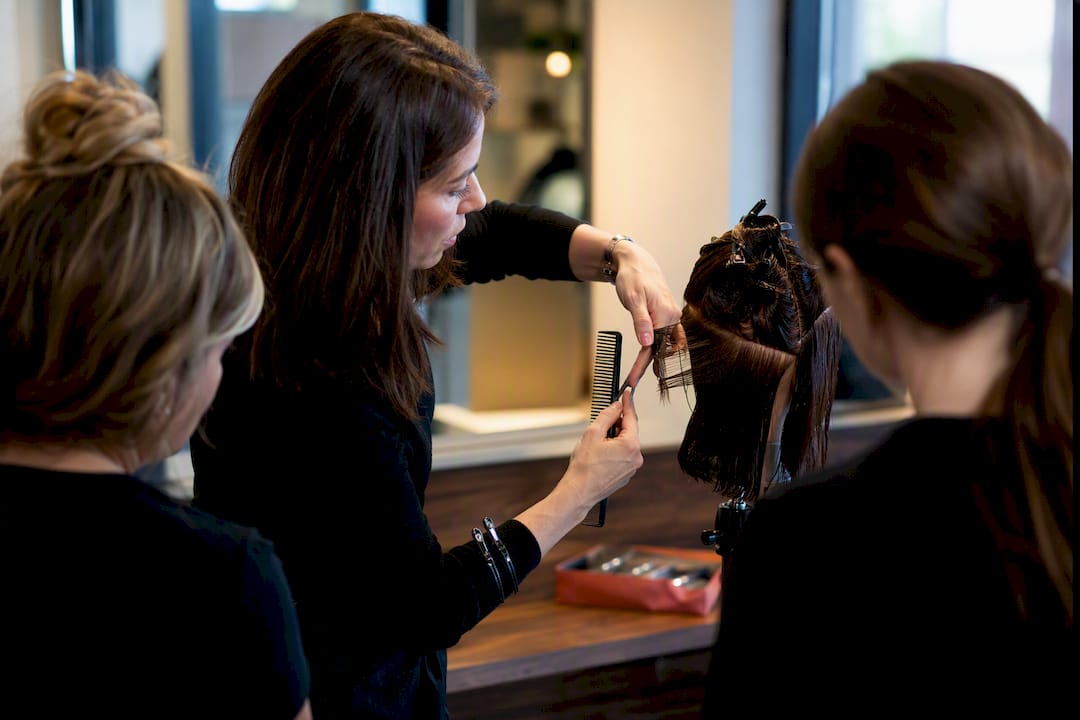
Peer learning sessions work well: a monthly technique-sharing hour where a senior stylist teaches a new color method or a trending cut to the rest of the team. It costs nothing but time, and it reinforces the career-development piece stylists actually want. Client-feedback boards, where positive reviews get posted publicly, give stylists visible proof their work matters beyond their own paycheck.
Team input on non-client decisions, like retail product selection or salon playlist, sounds small but signals that ownership listens beyond the technical side of the job. A brief team huddle before opening, five minutes to flag the day’s bookings and any concerns, builds a sense of shared operation rather than isolated chairs working independently.
Engagement in this environment isn’t about grand initiatives. It’s about small, recurring moments that remind stylists their input shapes how the salon runs, not just how their own chair performs.
Building an Inclusive Culture That Keeps Stylists Longer
A supportive culture in a salon setting starts with how conflict and difference get handled day to day, not with a values statement on the wall. Stylists come from different backgrounds, specialize in different textures and techniques, and often serve distinct client bases. A culture that treats all specialties as equally valuable, rather than ranking color specialists above texture specialists or vice versa, prevents the quiet resentment that pushes skilled people toward booth rental or a competitor down the street.
Clear anti-favoritism practices matter here. If certain stylists always get the prime Saturday slots or the walk-in overflow, say so openly and rotate fairly, or explain the criteria if seniority genuinely drives the split. Ambiguity around who gets what breeds distrust faster than almost anything else in a commission-based environment.
Language matters too. A workplace where staff feel comfortable raising a scheduling conflict, a client complaint, or a personal need without fear of being labeled difficult retains people longer. Owners who model this by asking for feedback on their own decisions, not just giving it, set the tone for the rest of the team.
Inclusive scheduling also means considering staff outside a narrow default: parents needing predictable hours, stylists managing health conditions, or team members observing religious holidays. A salon flexible enough to accommodate these needs, within reason, keeps experienced staff who might otherwise leave for a more accommodating booth rental setup.
What Exit Interviews Reveal About Salon Staff Retention
Every departure is a data point, and most owners skip the conversation that would actually explain why it happened. A structured exit interview, even a short one, surfaces patterns you can’t see from inside daily operations.
Ask specific questions rather than a generic “why are you leaving”: What made you start looking elsewhere? Was there a moment when you felt undervalued? Would a change in pay, schedule, or management have kept you? Written responses, collected even after the stylist has left, tend to be more honest than an in-person exit conversation where politeness takes over.
Look for repeat themes across multiple exits. If three stylists in a row cite unclear commission math, that’s not a coincidence, it’s your next audit priority. If departures cluster around a particular manager or shift lead, that person’s leadership style needs review before you lose a fourth. Academic research on salon retention strategies points to exactly this pattern: leaders who systematically track departure reasons catch structural problems faster than those relying on gut instinct.
Close the loop by sharing what changed as a result of exit feedback with your remaining team, without naming the departed stylist. It signals that leaving didn’t just end the conversation. It started a fix.
Supporting Mental Health in a High-Pressure Salon Environment
Standing for eight-plus hours, managing difficult clients, and hitting revenue targets on commission creates a specific kind of pressure that generic workplace wellness programs rarely address. Burnout ranks among the top drivers of turnover across industries, and salons carry unique versions of it: physical strain, emotional labor with clients, and income volatility tied directly to how many bodies sit in a chair each week.
Practical support starts with normalizing mental health conversations without turning them into a formal program nobody uses. A manager who checks in genuinely, not performatively, during a one-on-one and asks “how are you actually doing” builds more trust than a poster in the break room listing a hotline number.
Concrete steps that fit a salon budget: flexible sick-day policies that don’t penalize stylists for protecting their income, a referral list of local counselors or telehealth options for staff who want it, and enforced non-negotiable PTO so burnout doesn’t quietly build across a full year without a break. Cross-training staff to cover for each other during time off reduces the guilt many stylists feel about taking leave, since a booked column doesn’t have to sit empty.
Owners who treat mental health support as an operational line item, not an afterthought, tend to see it reflected in lower churn and steadier client relationships over time.
What Most Salon Owners Get Wrong About Keeping Staff
The biggest mistake I see is tolerating a toxic top producer because their numbers look good on paper. That stylist’s behavior quietly trains everyone else that revenue buys immunity, and your best culture-carriers, not your worst performers, are usually the ones who leave first because of it.
Weekly one-on-ones compound in ways owners underestimate. Five minutes a week catches a scheduling frustration before it becomes a resignation. Skip them for a month and you’re doing damage control instead of maintenance.
The autonomy booth rental offers is real competition. Salons win by pairing that same flexibility with benefits a solo renter can’t easily build alone: mentorship, a steady client pipeline, and a team that shares the emotional weight of the job.
— Oliver
Turning This Plan Into a System With LumariPRO
Building the systems above by hand, spreadsheets for commission tracking, a folder of onboarding documents, a mental note of who’s due for a review, works until your team grows past a handful of stylists. There are platforms built for the gap between knowing what to fix and having the tools to run it consistently.
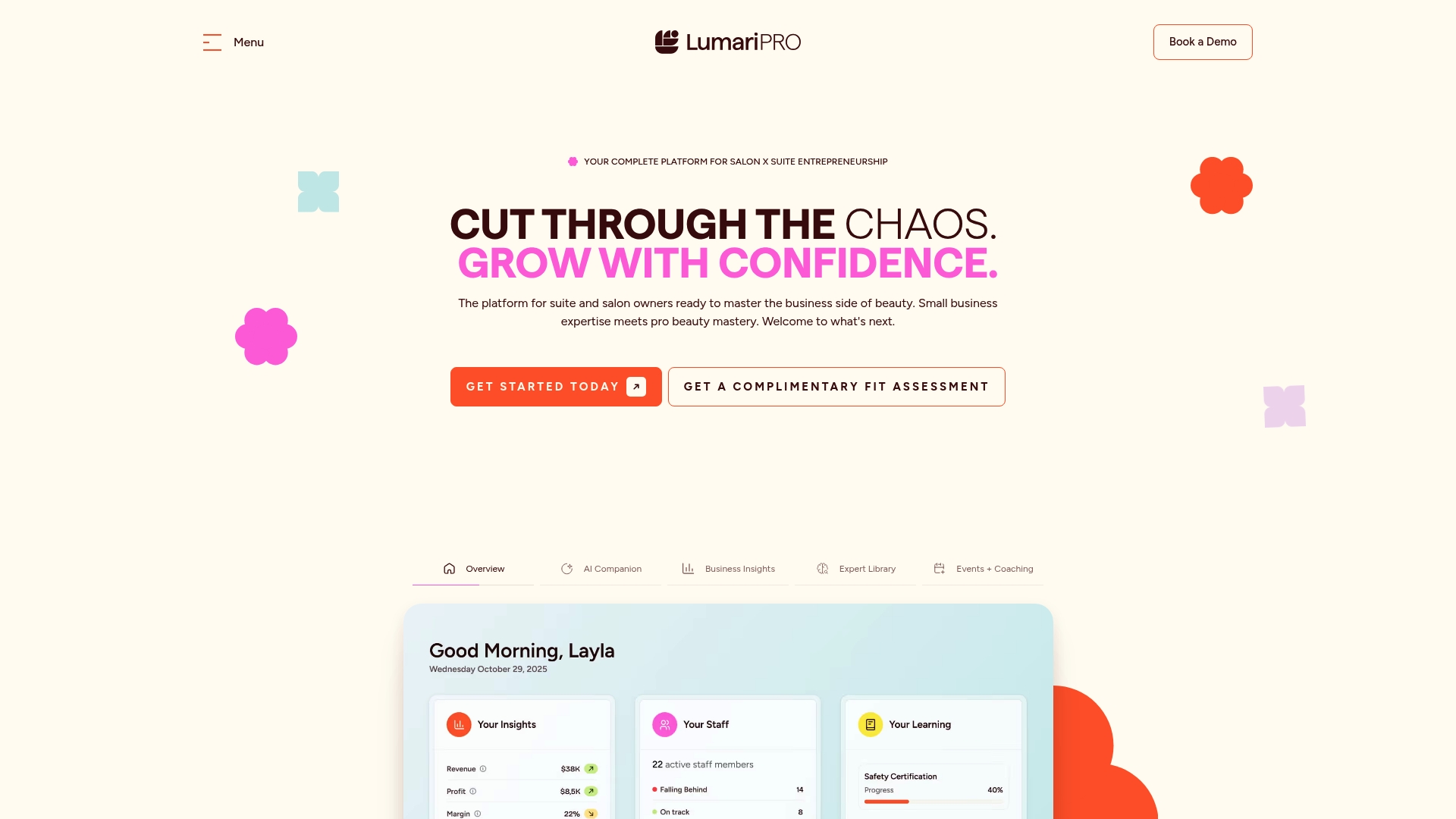
The platform maps directly onto the levers covered here: onboarding playbooks that turn a 90-day plan into a repeatable checklist, commission visibility so stylists see their own math without asking, and dashboards that track the same KPIs this article recommends, rebooking rate, monthly churn, tenure, without you building a spreadsheet from scratch. Education budgeting tools help you fund the career paths that keep ambitious stylists from looking elsewhere. If you want help thinking through where your salon leaks talent first, LumariPRO’s complimentary fit assessment walks through your specific numbers and flags the highest-leverage fix for your team.
Sources
- What Gets Your Best Employees to Stay? | MIT Sloan Management Review
- Misclassification of Employees as Independent Contractors | U.S. Department of Labor
- Barbers, Hairstylists, and Cosmetologists | U.S. Bureau of Labor Statistics (BLS)
- SHRM research on burnout and retention (2024)
- Stylist & Therapist Retention: Keeping Your Best Talent | Rework resources
FAQ
What Are the 5 C’s of Employee Retention?
Definitions vary across sources, but common versions include career development, compensation, communication, culture, and connection between staff and management, all of which map directly onto the systems covered in this guide.
What Is a Good Staff Retention Rate for a Salon?
There’s no single universal benchmark, but salons tracking strong 90-day and 12-month retention are generally outperforming the industry’s typical churn, given that average beauty professional tenure runs only about two to three years.
What Is the Failure Rate of Hair Salons?
Specific salon business failure rate data isn’t reliably published by a single authoritative source, but high staff turnover is consistently cited as a major contributor to salon instability and closure.
How Can LumariPRO Help With Salon Staff Retention?
LumariPRO gives salon and suite owners onboarding playbooks, commission tracking, and retention dashboards in one platform, replacing the scattered spreadsheets most owners use to manage the systems covered in this guide.