The most effective approach combines three moves: recommend during the consultation, offer exactly one retail product per visit, and keep a short, visible add-on menu clients can say yes to without thinking twice. Salons that put add-on menus in front of clients see 30 to 45 percent uptake on at least one add-on. Start with the menu and consultation timing below, then layer in scripts and automation once the basics feel natural.
TL;DR:
- Display short, visible, and easy-to-understand add-on menus at strategic locations like station cards, QR codes, or online booking, to boost uptake.
- Recommend add-ons during the consultation by addressing the client’s specific concerns, making the suggestion relevant and natural.
- Use scripts based on genuine observations and behavioral principles like anchoring, social proof, and loss aversion to improve acceptance rates.
- Offer a three-tier pricing menu with the premium option at the top to leverage anchoring and encourage clients to choose the mid-tier as the best value.
- Focus on recommending one product per appointment, tied directly to the service performed, and demonstrate it in the mirror to increase retail sales.
Table of Contents
- Design an Add-On Menu That Sells Itself
- Use the Consultation Window: When and How to Recommend
- Scripts and Behavioral Techniques That Increase Acceptance
- Bundles, Tiered Pricing, and How to Price Add-Ons
- Retail Sales: One Product Per Visit and Mirror-Moment Recommendations
- Use Technology and Automation to Make Upsells Consistent
- Loyalty, Memberships, and Rebooking for Sustained Revenue
- How LumariPRO Helps Operationalize This Playbook
- What Independent Suite Owners Get Wrong About Upselling
- Try LumariPRO to Put These Upsell Habits on Autopilot
- Sources
- FAQ
Design an Add-On Menu That Sells Itself
A good add-on menu does the selling before anyone says a word. It needs to be short, visible, and priced so clients don’t have to do math to decide.
Stick to services that run 5 to 15 minutes and slot cleanly into an existing appointment. Bond treatments, a gloss, a scalp massage, an express blowout, and paraffin dips all work because they’re fast, they show a visible result, and they don’t require rebooking. A client getting color already understands why a bond treatment matters; you’re not introducing a new concept, you’re completing one they already started.
Where you put the menu matters as much as what’s on it:
- Station cards clients can flip through while processing color or waiting under a dryer
- QR-code menus linked from the chair, so clients browse on their own phone without a hard sell
- An add-on prompt built into online booking, so the choice happens before the appointment even starts
Cap each service category at three to six add-ons. More than that and clients default to “no” because choosing feels like work. Price every add-on to cover product cost plus a real margin. This isn’t a loss leader. It’s a second revenue line that should hold its own.
Use the Consultation Window: When and How to Recommend
The consultation is the highest-converting moment in the entire appointment, and it’s not close. A client walking in is still in decision mode. Once the service starts, they shift into experience mode. They’re relaxing, scrolling their phone, chatting. Asking for an upgrade at that point interrupts something. Asking during consultation feels like part of the plan.
Two questions do most of the work:
- “What’s your biggest hair or skin concern right now?”
- “How much time do you spend styling at home?”
Both questions surface a real problem the client already has, which means your recommendation lands as a solution rather than a sales pitch. If someone says they spend 20 minutes fighting frizz every morning, an express blowout add-on or a smoothing treatment isn’t an upsell. It’s the answer to the question they just answered.
Priming works before the appointment too. A booking confirmation that says “We recommend adding 10 minutes for a scalp treatment with your color service, want us to hold that spot?” gets a warmer response than any in-chair pitch, because the client makes the decision on their own time, without anyone watching them decide.
Scripts and Behavioral Techniques That Increase Acceptance
Good scripts don’t sound like scripts. They sound like a stylist noticing something real and saying it out loud. Observation-based phrasing consistently converts better than generic pitches because it’s tied to something the client can verify about themselves.
A few that work across most services:
- Consultation: “I noticed some breakage near your ends. Want me to add a bond treatment today? It’s 10 minutes and I think you’ll see the difference immediately.”
- Mirror moment: “This is the smoothing serum I used on you today. A little goes a long way, so this size should last you about two months.”
- Booking confirmation: “We’ve reserved extra time in case you want to add a gloss. No pressure, just let your stylist know.”
- Gentle decline handling: “No worries at all, let’s keep it simple today. I’ll mention it again next time if it still looks like a good fit.”
Behind these scripts sit four principles worth knowing by name. Anchoring means showing the premium option first, so the mid-tier option looks reasonable by comparison. A decoy is a deliberately weak middle option that pushes clients toward the tier you actually want them to pick. Social proof (“most clients add the gloss with this color service”) works because people copy behavior they think is normal. Loss aversion frames the add-on as protecting something they already have, like healthy ends, rather than buying something new.
Pro Tip: Roll these out in order, not all at once. Start with social proof language and consultation timing for two weeks before you introduce anchoring or bundled pricing. Teams that phase techniques in gradually adopt them more consistently than teams handed a full script sheet on day one.
Bundles, Tiered Pricing, and How to Price Add-Ons

A three-tier menu (good, better, best) does more work than any single add-on because it lets the client anchor against a price they see first, not one they have to guess at.
Put your premium package at the top of the menu, even if you expect most clients to land in the middle. That premium option makes the mid-tier package look like the sensible choice, which is exactly the anchoring effect Simon-Kucher describes in its work on behavioral pricing. A few rules to build the menu around:
- Every tier should cover product cost plus margin. Never build a “value” tier that loses money to look generous.
- Anchor with the premium package first, both in conversation and on the printed or digital menu.
- Make the middle tier the obvious win. It should include one thing the base tier doesn’t, at a price gap that feels small next to the top tier.
The math is simple and worth running for your own numbers. If a $20 add-on gets 30 percent adoption across 100 appointments a month, that’s 30 add-ons, or $600 in extra monthly revenue from a service that adds minutes, not hours. Run your own volume through the ROI calculator to see what a realistic adoption rate would mean for your chair.
Retail Sales: One Product Per Visit and Mirror-Moment Recommendations
Recommending five products in one visit gets you zero sales. Recommending one, and using it on the client before you say a word about it, gets you a sale most of the time. That’s the logic behind the one-product-per-visit rule, and it holds up because it removes decision fatigue entirely.

Pick the product tied to what you actually did in the chair. If you used a heat protectant before blow-drying, that’s the product. Show the client the result in the mirror, then hand them the bottle: “This is what kept your color from fading. Want to take it home?” Ring it up at checkout as a simple confirmation, not a second pitch.
A few merchandising habits make this easier:
- Curate a small shelf near checkout with just the products you actively recommend, not your full retail catalog.
- Stock travel sizes for clients who hesitate at full price.
- Keep POS-ready displays stocked so checkout never becomes the moment you realize you’re out of the one thing you just recommended.
Use Technology and Automation to Make Upsells Consistent
The techniques above only work if every stylist does them every time, and memory is not a reliable system. Automation closes that gap.
A few worth setting up first:
- Add-on prompts built into your online booking flow, so clients see relevant options before they arrive
- Check-in suggestions that surface based on service history
- CRM-triggered recommendations, like a keratin reminder that fires automatically around the 12-week mark
- Post-visit messages that follow up on the product you recommended, in case they want a refill
Booking-time prompts are among the highest-leverage automations available to a small operation, because they generate revenue before the client even sits down. If you’re a suite owner with no admin staff, start with just one: turn on add-on prompts in whatever booking software you already use. That single switch does more than any script you could memorize.
Loyalty, Memberships, and Rebooking for Sustained Revenue
A discount-heavy loyalty program trains clients to wait for a deal. A membership built around experience trains them to show up more often. Ulta Beauty’s approach of giving members a free weekly in-store service is a useful model: the perk gets people through the door on a rhythm, not just when they need a discount.
A few structures worth testing:
- A monthly membership that includes one express service (a blowout, a scalp treatment) instead of a percentage off
- Priority booking access for members during high-demand weeks
- A same-day rebooking incentive, like a small credit toward their next add-on if they book before leaving the chair
Rebooking at checkout is the cheapest retention tool you have. It costs nothing and takes 30 seconds, and it turns one appointment into a recurring one before the client has even left the building.
How LumariPRO Helps Operationalize This Playbook
Every technique in this guide works better with a system behind it instead of a sticky note on the mirror. LumariPRO maps directly to the moves above: AI coaching helps you write and refine scripts for consultation and mirror moments, POS integrations turn booking prompts and check-in cues into something automatic rather than something you have to remember, and the platform’s dashboards track your retail-to-service ratio so you know which add-ons are actually earning their shelf space.
If you’re starting from zero, a short checklist gets you moving this week:
- Connect your POS system so client history and product recommendations sync automatically
- Turn on booking-time add-on prompts
- Pick three add-ons per core service, no more
- Train your team on the one-product rule using a 10-minute weekly roleplay
Pro Tip: Don’t try to launch all four steps in one day. Connect the POS first. Everything else gets easier once your data is actually flowing.
What Independent Suite Owners Get Wrong About Upselling
Most upselling advice treats the problem as a script problem: give a stylist the right words and revenue follows. It’s backwards. The words matter far less than the moment they’re said in. A perfect script delivered at checkout will underperform a mediocre one delivered during consultation, because the client’s mindset, not your phrasing, decides whether they say yes.
The bigger miss I see in independent suites is menu design. Owners either skip a formal add-on menu entirely, trusting stylists to freestyle recommendations, or they build a menu with 15 options that nobody can hold in their head mid-service. Three to six add-ons per service isn’t a limitation. It’s what actually gets chosen.
If you take one thing from this guide and implement it first, make it the one-product-per-visit rule. It requires no new pricing, no new menu, no new training deck. It just requires picking a single product tied to what you did in the chair and saying so out loud. Everything else here, the tiers, the automation, the membership structure, works better once that habit is already in place. Sequencing beats sophistication almost every time.
— Oliver
Try LumariPRO to Put These Upsell Habits on Autopilot
Running this playbook by memory works for a week. Running it for a year needs a system, and that’s the gap LumariPRO is built to close for suite renters and independent beauty pros. Instead of hiring a consultant or piecing together spreadsheets, you get AI coaching trained on real salon economics, POS and QuickBooks integrations that turn booking prompts into something automatic, and playbooks built specifically for solo operators, not generic small business software.
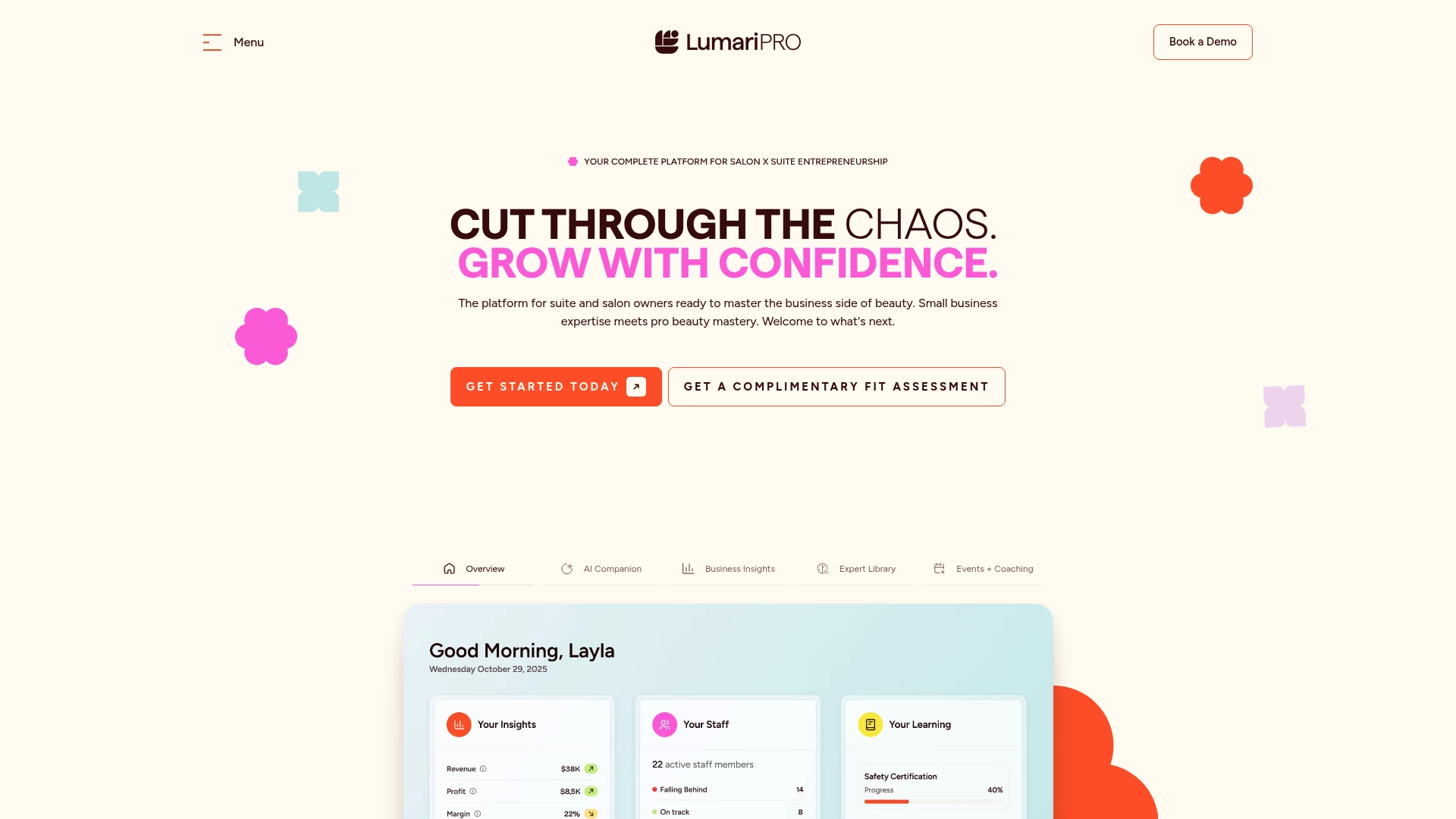
If you’re not sure where your business stands right now, the free fit assessment walks through your current setup and shows exactly where these techniques would move the needle fastest. Plans start with a Launch tier, with higher tiers available for suite owners ready for deeper coaching and integrations. Full details live on the pricing page. Book your fit assessment and see what a week of consistent upselling could actually add to your ticket.
Sources
This guide draws on behavioral pricing research from Simon-Kucher, salon-specific retail and consultation data from Zenoti, add-on script guidance from MenuHoster, average-ticket benchmarks from HairsalonPRO, and implementation sequencing from SalonBoost. For retention strategy beyond the chair, see this customer retention guide.
- Price anchoring: Unlock growth with behavioral pricing | Simon-Kucher
- How to Sell Retail and Upsell Salon Services (2026 Guide) | Zenoti
- Upsell Salon Add-Ons Without Being Pushy | MenuHoster
- Salon upselling mastery: 7 behavioral science techniques | SalonBoost
FAQ
What Are Some Effective Techniques for Upselling in a Salon?
The strongest techniques are consultation-stage recommendations, a short visible add-on menu, one product recommendation per visit, and tiered pricing that anchors clients toward a mid-tier package.
How Do I Attract More Customers to My Salon?
Upselling and attracting new clients aren’t the same problem, but a strong add-on menu and visible retail routine build the kind of reputation, and referrals, that bring new clients in without extra ad spend.
How Do I Sell Products in a Salon Without Feeling Pushy?
Recommend exactly one product tied to what you did during the service, demonstrate it in the chair, and confirm it briefly at the mirror rather than pitching a full shelf at checkout.
How Can I Make My Salon More Profitable?
Combine a short add-on menu priced above cost, consultation-stage upselling, and booking-time automation. Reports show visible add-on menus can lift adoption by 30 to 45 percent, and a platform like LumariPRO can help track which changes actually move your average ticket.