Focus on two to four high-margin, low-time add-ons and put them where clients actually book: online booking and checkout. A gloss treatment, a scalp massage, or a bond builder each take under 20 minutes and can add $15 to $60 per ticket without touching your schedule. Track two numbers from day one: attach rate and incremental average ticket. If those two climb, you’ve found your winners.
TL;DR:
- Focusing on zero-minute or short-time add-ons like scalp massages or retail samples allows you to sell to every client without impacting your schedule.
- Properly tracking attach rate and incremental ticket helps identify which add-ons truly boost profits, especially after initial testing periods of 20-30 appointments.
- Using smart pricing methods such as value-based or bundle pricing can significantly increase add-on profitability compared to underpricing by guesswork.
- Displaying add-ons immediately after service selection with visual proof and staff scripting increases client uptake without feeling pushy.
- Running a small-scale pilot and measuring key metrics consistently ensures successful add-on implementation before expanding or introducing new options.
Table of Contents
- What Are Salon Add-Ons and Why They Matter Now
- High-Converting Salon Add-On Ideas by Category
- What Pricing Strategy Actually Works for Add-Ons?
- How to Present and Sell Add-Ons Without Feeling Pushy
- Will Add-Ons Disrupt Your Schedule and Inventory?
- How Do You Calculate ROI on a Salon Add-On?
- How LumariPRO Helps Salons Price and Track Add-Ons
- Every Add-On Rollout I’ve Seen Fail Made the Same Mistake
- Try LumariPRO to Price and Measure Your Add-Ons
- Sources
What Are Salon Add-Ons and Why They Matter Now
Service add-ons are the small, optional treatments layered onto a base appointment. A blowout is an add-on. So is a 10-minute scalp massage tacked onto a color service, or a lash tint added to a facial. In the industry, you’ll also hear them called enhancements, upgrades, or extras. All of these point to the same mechanic: a short, priced boost sold alongside the main service.
The reason add-ons matter more now than five years ago comes down to how booking software surfaces them. Platforms like Mindbody let you assign add-ons to specific appointment types and control whether clients see them during online booking. Boulevard built an “add-on service only” setting with zero-minute duration options specifically so a small charge doesn’t eat a schedule slot. When the software makes an add-on one tap away, clients say yes more often than when a stylist has to remember to mention it mid-appointment.
Zenoti’s Predictive Intelligence tool, announced to recommend add-ons based on booking and consumption patterns, is a signal of where this is heading. Software is starting to suggest the right upgrade at the right moment instead of leaving it to memory. You don’t need AI to start, though. You need a short list of add-ons with clear prices, and a system that shows them before the client’s card is even out.
High-Converting Salon Add-On Ideas by Category
Here’s where the real menu-building happens. Every add-on below is grouped by category with realistic price ranges and time commitments, based on common industry pricing and published salon menus.
Hair services:
- Gloss or glaze treatment: a low-cost treatment often taking a short amount of time
- Bond builder or Olaplex-style treatment: a moderately priced treatment with a brief duration
- Extra color or density charge (for long or thick hair): an additional charge depending on product use
- Tinsel or peekaboo highlights: a specialty highlight treatment with a moderate price
Scalp and treatment add-ons:
- Scalp massage or scalp treatment: a soothing add-on typically lasting a few minutes
- Hot towel or aromatherapy steam: a brief and low-cost service enhancement
Styling upgrades:
- Blowout or finish upgrade: a styling enhancement with variable duration
- Thermal protection or flat-iron finishing service: a protective styling add-on usually priced moderately
Lashes and brows:
- Lash tint or lash lift: common eyelash enhancement services with moderate pricing
- Brow lamination or brow tint: typical brow services offered as add-ons
- Light-cured adhesive lash services often carry a premium price given the specialty product and extra chair time
Nails:
- Nail art add-ons: decorative nail services usually offered at a range of prices
- Paraffin dip or hand mask: moisturizing treatments for hands often available as add-ons
- Gel soak-off: nail removal service often offered as an add-on
Facials and spa services:
- Express facial add-on or peel: a facial enhancement with variable pricing and time
- Aromatherapy add-on: a sensory enhancement service typically low-cost
Retail and homecare:
- Trial-size homecare products: small product offerings sold as add-ons
- Prescriptive take-home kits, which typically have higher profit margins as previously marked-up retail products
If you’re deciding where to start, prioritize the zero-minute and low-minute options first. A scalp massage add-on or a trial-size retail item doesn’t touch your appointment slots, which means you can sell it to every single client without reworking your day. Save the 20-minute treatments for slower days or clients who’ve already blocked extra time.
What Pricing Strategy Actually Works for Add-Ons?
Most salons underprice add-ons because they guess instead of calculate. Pro Beauty Central’s breakdown of add-on pricing methods gives you four real starting points, and each fits a different situation.
- Time-based pricing. Add your staff cost per minute to product cost, then layer on margin. If a stylist earns $30/hour ($0.50/minute) and a 15-minute scalp treatment uses $2 in product, your base cost is $9.50. Price it at $25 to $30 and you’re covering cost with room for profit.
- Product-cost-plus pricing. Take the product cost and multiply by a markup, usually 3x to 5x for retail-adjacent items, then add a small time premium if any service time is involved. A $6 mask that takes zero extra minutes might sell for $20 to $25.
- Value-based pricing. Price by what the client perceives as the payoff, not what it costs you. A gloss that promises instant shine can command $35 to $45 even if your actual cost is under $10, because the client is paying for the visible result, not the ingredients. Test this by offering the same add-on at two price points on different days and watching attach rate.
- Bundle and tiered pricing. Package two or three add-ons into a set rate that’s slightly below buying them individually, and push these bundles on slower days to fill chairs without discounting your core services.
Pro Tip: Don’t set an add-on price once and forget it. Run it at two different prices for two weeks each, then compare attach rate side by side. The data will tell you more than any pricing formula.
How to Present and Sell Add-Ons Without Feeling Pushy
Where you show an add-on matters more than how good the add-on is. Show it too late, and clients feel upsold. Show it too early, and they haven’t seen the base service value yet. The sweet spot is right after the client picks their core service, before they hit “confirm.”
- Booking placement: Display add-ons immediately after service selection, and separate them into optional and required groups the way Bella Booking’s add-on settings allow, so a client can decline without feeling like they’re missing a mandatory step.
- Visual proof: Fresha’s Service Portfolios feature lets salons attach images directly to services, and a short before/after thumbnail paired with a two or three word benefit line, like “instant shine, less frizz,” converts better than a paragraph of description.
- Staff scripting: Give your team closed-choice phrasing instead of open offers. “Would you like the shine treatment added for $25 today?” beats “Do you want anything extra?” every time, because it removes the mental work of inventing an answer.
- Checkout and deposits: Fold the add-on price into deposit calculations and receipts so nothing surprises the client at the register, and train front-desk staff to prompt for add-ons through your POS the same way a barista asks about a pastry.
Offering add-ons directly in the booking flow, not just at checkout, tends to lift basket value because clients who see the option while booking are more likely to choose it than clients asked cold at the front desk, according to Shore’s research on booking-stage add-on placement.
Will Add-Ons Disrupt Your Schedule and Inventory?
Not if you set them up correctly. The mistake most salons make is treating every add-on the same way operationally, when they behave very differently depending on duration.
- Duration handling. A zero-minute add-on, like a $10 hot towel upgrade, doesn’t touch your appointment slots or availability. A 20-minute treatment does, and needs to be built into the schedule the same way a full service would be.
- Staff assignment. Decide upfront whether the same provider must perform the add-on or whether another team member can step in. Same-provider rules simplify pay splits but can create bottlenecks on busy days.
- Inventory tracking. Product-based add-ons need per-use costing in your system, or you’ll lose track of margin the moment product prices rise.
- Run a 30-day pilot. Pick one zero-minute add-on and one short treatment, set your prices, train your staff on the script, run it for a month, and measure attach rate before rolling out anything wider.
How Do You Calculate ROI on a Salon Add-On?
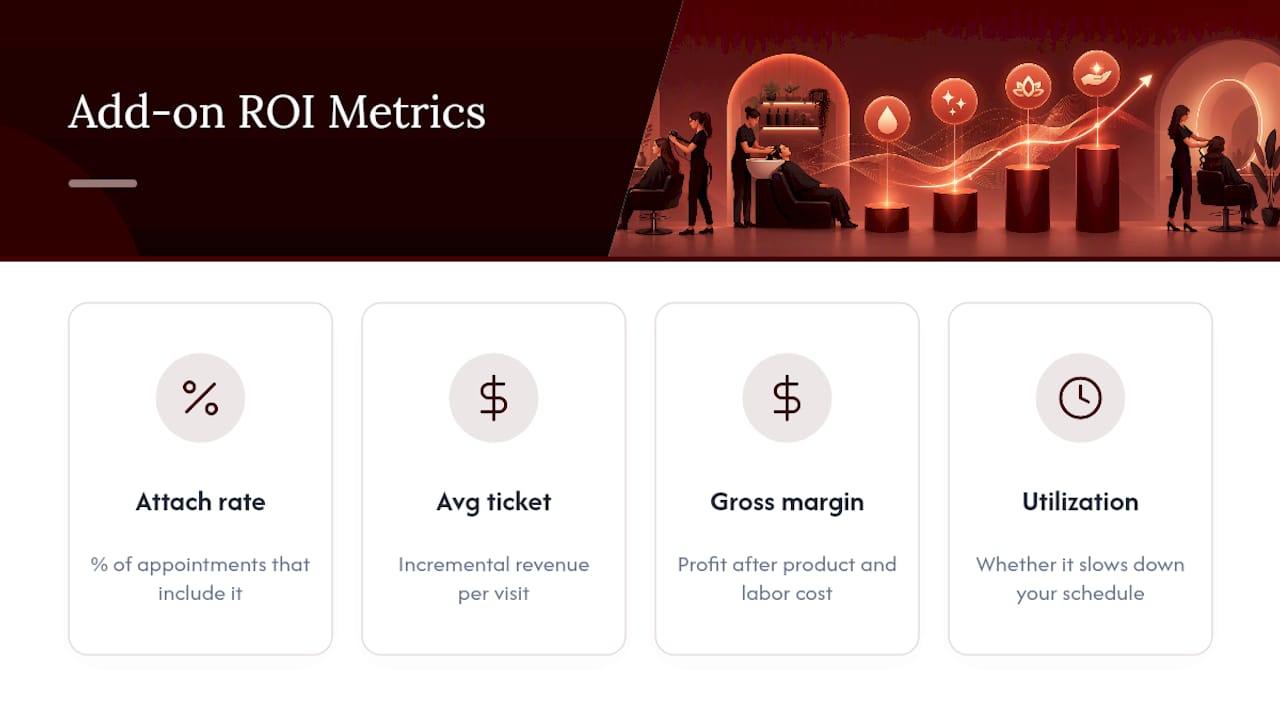
Four numbers tell you whether an add-on is worth keeping: attach rate (the percentage of appointments that include it), incremental average ticket (how much it adds per visit), incremental gross margin (profit after product and labor cost), and utilization impact (whether it’s slowing down your schedule).
Here’s the math on a realistic example.
Give any new add-on at least two to four weeks and a minimum of 20 to 30 appointments before judging it. Anything below that sample size is noise, not a trend.
How LumariPRO Helps Salons Price and Track Add-Ons
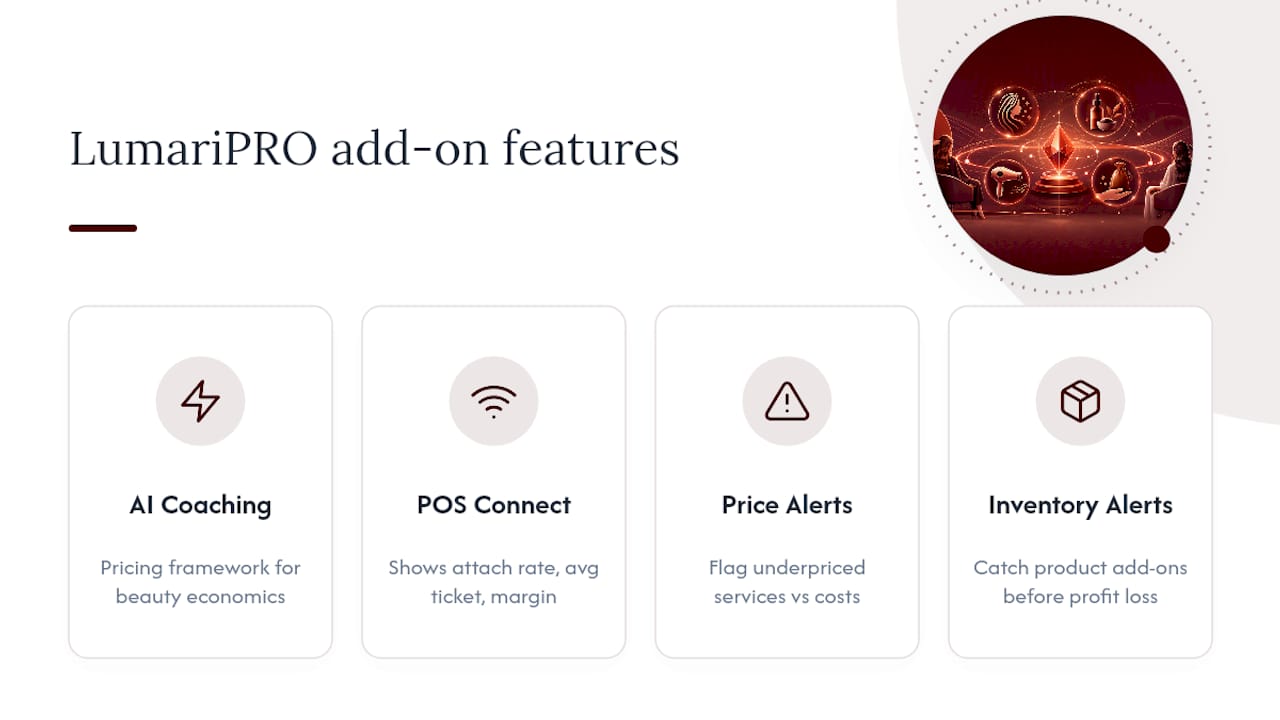
Pricing an add-on by gut feel is how margins quietly disappear. LumariPRO’s AI-powered coaching and business playbooks give suite renters and salon owners a pricing framework built for beauty economics specifically, not generic retail math borrowed from another industry.
Some platforms connect to your POS and QuickBooks, which means attach rate, average ticket, and margin per add-on can show up on a real dashboard instead of a spreadsheet you update once a quarter. Prescriptive pricing templates may flag when a service is underpriced relative to product and labor cost, and inventory alerts can catch product-based add-ons before they eat into profit unnoticed.
Every Add-On Rollout I’ve Seen Fail Made the Same Mistake
Salons that succeed with add-ons start with one or two, standardize the script across every chair, and track attach rate weekly before adding anything else. The rollouts that fail almost always launch five or six add-ons at once, train staff loosely, and lose track of which ones actually moved the ticket. Pick fewer add-ons than feels ambitious. Measure them harder than feels necessary.
— Oliver
Try LumariPRO to Price and Measure Your Add-Ons
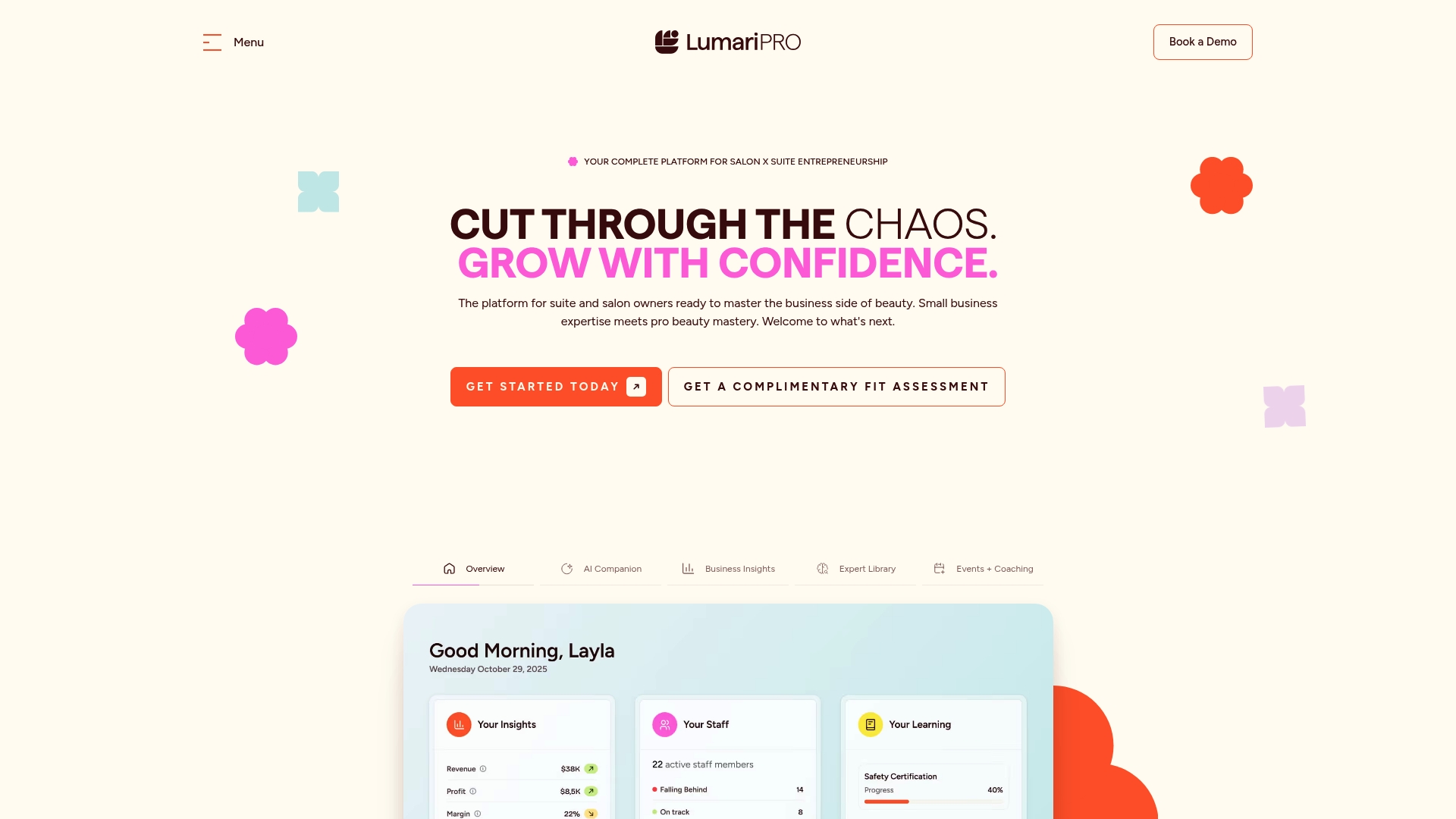
LumariPRO is the practical next step if you’re running add-ons on guesswork instead of numbers. Where a spreadsheet forces you to update margins by hand, LumariPRO connects to your POS and QuickBooks so attach rate and incremental ticket show up automatically, without a manual export.
If you’ve already got two or three add-ons in mind from this guide, run them through the ROI calculator to see the projected margin before you touch your menu. Pair that with LumariPRO’s pricing playbooks and coaching if you want a second set of eyes on your numbers before you commit. Start with the platform overview and see whether a trial fits how your suite or salon actually runs.
Sources