If you’re shopping for software like Zenoti but need something that actually fits your budget and business size, the short answer is this: Lumaripro for suite renters and independent owners who need coaching plus financial dashboards; Vagaro for small salons wanting a low-cost, fast setup; Boulevard for premium single-location salons focused on front-desk flow; Mangomint for speed-focused teams with payroll needs; Fresha for marketplace-driven client acquisition; and Mindbody for class-based wellness businesses needing consumer discovery.
Here’s the shortlist at a glance:
- Lumaripro — AI coaching, QuickBooks and POS integrations, real-time financial dashboards built for suite renters and independent beauty professionals
- Vagaro — Low starting price, flexible setup, solid for small teams that don’t need enterprise depth
- Boulevard — Refined front-desk UX and booking flow for premium salons and boutique spas
- Mangomint — Fast scheduling, modern interface, and integrated payroll for salons prioritizing efficiency
- Fresha — Commission-free marketplace model with easy onboarding for discovery-driven growth
- Mindbody — Consumer marketplace exposure and class/membership tools for fitness-adjacent wellness businesses
- GlossGenius — Polished mobile-first booking for solo practitioners and small teams
- Meevo — Retail and membership management for high-volume salon operations
Pricing transparency varies widely across these platforms. Vagaro, GlossGenius, Square Appointments, and Fresha publish starting prices; Zenoti, Mindbody, and Meevo are enterprise-focused and typically require custom quotes with no published entry price. Implementation for these quote-based platforms, especially Zenoti, often runs 2–4 months. See the comparison table below for a full breakdown, and check each vendor’s demo or trial availability before committing.
Key Takeaways
The best Zenoti alternative depends on your business model and scale: suite renters and independent owners get the most from Lumaripro’s coaching-plus-platform approach, while multi-location chains and high-volume operations need enterprise-grade tools like Meevo or WellnessLiving.
| Point | Details |
|---|---|
| Match platform to scale | Solo and suite operators need different tools than multi-location chains; starting with the right tier saves migration costs later. |
| Budget beyond the subscription | Total cost includes payment processing, add-ons, onboarding, and migration fees — get all line items in writing before signing. |
| Med-spa compliance is non-negotiable | If you run clinical or aesthetic procedures, confirm consent forms and treatment notes before committing to any platform. |
| Run a targeted demo | Test your three most friction-heavy workflows in every finalist, not the vendor’s preferred demo sequence. |
| Lumaripro for independent owners | Suite renters and independent beauty professionals get AI coaching, financial dashboards, and QuickBooks integration purpose-built for their business model. |
Table of Contents
- What do the top Zenoti alternatives look like side by side?
- Why do salons, spas, and med-spas leave Zenoti?
- How do you choose the right Zenoti alternative for your business?
- Detailed snapshots of the top Zenoti alternatives
- How do these platforms compare on core features?
- What should you budget for when switching from Zenoti?
- When does Lumaripro make the most sense?
- What most comparison guides get wrong about switching software
- Lumaripro is the alternative built for how independent beauty businesses actually work
- Sources
What do the top Zenoti alternatives look like side by side?
The table below covers the 17 platforms most commonly evaluated as Zenoti replacements. Pricing reflects publicly available starting tiers or pricing shape where no published rate exists. Independent software roundups confirm that the best pick depends heavily on budget, team size, and the specific features your operation requires.
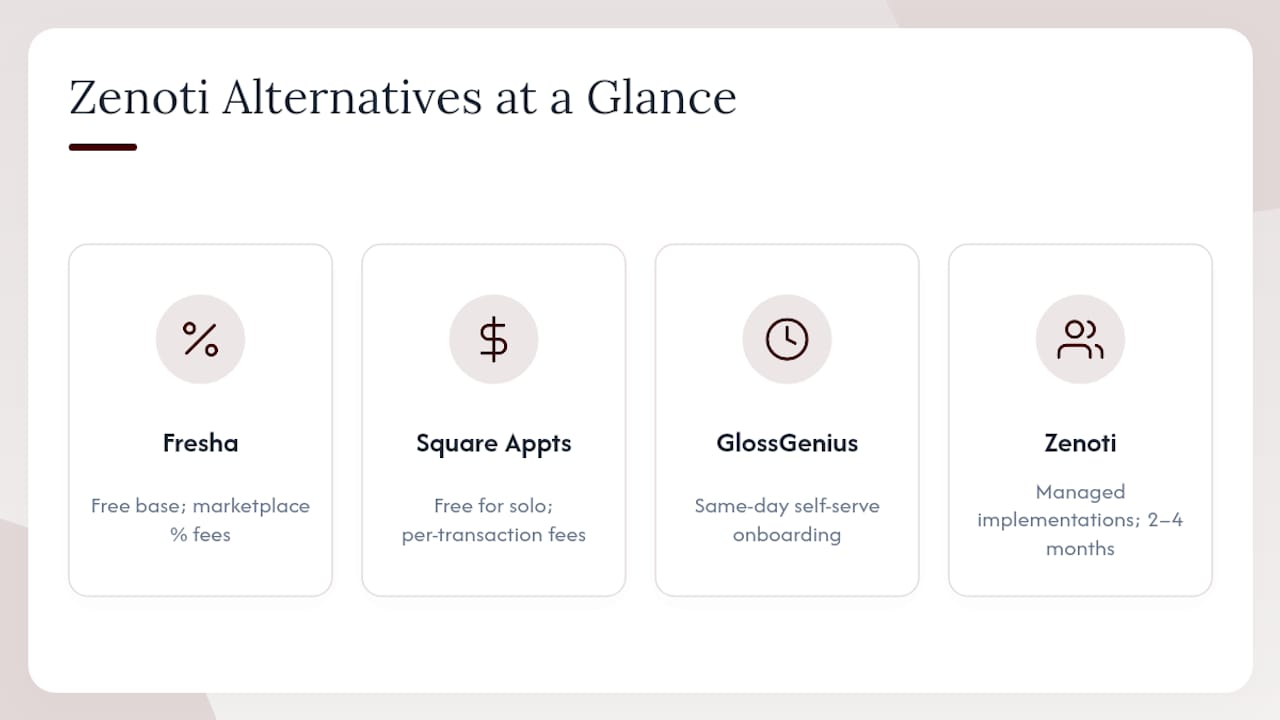
A few pricing notes worth flagging: Fresha’s “free” base plan charges a percentage on bookings sourced through its marketplace, so the real cost scales with your new-client volume. Square Appointments is genuinely free for solo users but adds per-transaction fees. Onboarding time ranges from self-serve same-day (Fresha, Square, GlossGenius) to managed implementations of several weeks or up to 2–4 months for Zenoti. Zenoti implementations for large teams commonly run 2–4 months.
Why do salons, spas, and med-spas leave Zenoti?
Zenoti is built for large, multi-location chains. Industry reviews consistently flag opaque pricing, lengthy onboarding, and mobile app gaps as the most common reasons operators start looking for alternatives. If any of the following sounds familiar, you’re not alone.
- Pricing opacity. Zenoti doesn’t publish rates. Most operators only learn the full cost after a sales call, and per-location fees can climb steeply as you add sites.
- Implementation length. Implementations of 2–4 months are common for Zenoti deployments, according to multiple operator reports. For a single-location salon, that timeline is hard to justify.
- Overkill for small teams. The platform’s depth is a genuine asset for a 20-location chain. For a 3-chair salon or a solo suite renter, most of that depth goes unused while the complexity remains.
- Front-desk training burden. New staff often need significant ramp-up time on Zenoti’s interface, which creates recurring training costs every time you hire.
- Mobile app complaints. Multiple review sources cite the mobile experience as a recurring frustration, particularly for owners who manage their business primarily from a phone.
- Limited clinical depth for med-spas. Zenoti covers basic appointment and client records, but operators running aesthetic clinics often find the consent form and clinical notes workflows insufficient compared to purpose-built med-spa tools.
- Contract lock-in. Annual contracts with limited exit flexibility are a common complaint, especially for growing businesses whose needs change quickly.
- Add-on fee creep. SMS marketing, advanced reporting, and certain integrations often cost extra, making the total bill higher than the initial quote suggested.
Pro Tip: Before you start demoing alternatives, pull your last 12 months of Zenoti invoices and list every line item beyond the base subscription. That number is your true cost baseline, and it’s what you’re actually comparing against.
A useful self-check: if you’re paying for features you never use, training every new hire from scratch, or waiting weeks for support responses, those are the clearest signals that a switch is worth the effort.
How do you choose the right Zenoti alternative for your business?
The right choice comes down to two things: your business model and scale, and whether you have clinical or regulatory requirements. Everything else is secondary.
Analyst overviews of the salon/spa software space confirm that trade-offs between platforms are driven by vertical fit and scale, not by feature lists alone. A med-spa needs consent forms and clinical notes. A suite renter needs financial clarity and pricing tools. A multi-location chain needs centralized reporting and inventory controls. No single platform wins on all three.
Must-have vs. nice-to-have criteria:
- Must-have: Scheduling and online booking, POS and payment processing, client records, basic reporting
- Must-have for med-spas: Treatment notes, consent forms, HIPAA-compliant data handling
- Must-have for multi-location: Centralized inventory, location-level reporting, staff permission controls
- Nice-to-have: Marketplace exposure, payroll integration, QuickBooks sync, SMS marketing, loyalty programs
Questions to ask vendors during demos:
- Can you export all client data (names, history, notes) in a standard format if you leave?
- What’s the typical onboarding timeline for a business my size?
- What are your support hours, and what’s the SLA for critical issues?
- Show me a real reporting dashboard, not a screenshot.
- What fees are NOT included in the base subscription?
- Do you offer month-to-month contracts, or is an annual commitment required?
Red flags to watch for:
- No published pricing and resistance to sharing ballpark figures before a demo
- No data export option or export limited to a proprietary format
- Mandatory 12-month or longer contracts with no pilot period
- Support only available via email ticket with no live option
A four-step evaluation sequence:
- Map your current processes and list the three workflows that cause the most friction today.
- Demo those exact three workflows in each finalist platform, not the vendor’s preferred demo flow.
- Confirm data migration: ask for a sample export from your current system and a sample import into the new one.
- Negotiate a pilot period or month-to-month start before signing a long-term contract.
Pro Tip: Involve your front-desk staff or the person who handles bookings in at least one demo. They’ll catch usability issues in 10 minutes that you’d miss in an hour of solo evaluation.
Detailed snapshots of the top Zenoti alternatives
Lumaripro
Built specifically for suite renters and independent beauty professionals, Lumaripro is the alternative that pairs platform tools with AI-powered business coaching, something no other entry on this list offers. Where most scheduling platforms hand you a dashboard and leave you to figure out the rest, Lumaripro connects to your POS and QuickBooks, surfaces real-time financial insights, and walks you through pricing strategy, client retention, and booth rental economics through built-in playbooks and live coaching.
- Pros: AI business coaching trained on suite ownership realities; QuickBooks and POS integrations; real-time financial dashboards; business playbooks for pricing and retention; peer community and expert-led group coaching
- Cons: Not designed for multi-location chains or high-volume front-desk operations; marketplace exposure is not a core feature
- Best for: Suite renters, booth renters, and independent salon/spa owners who need both a management platform and business growth guidance
- What to test in a demo: Financial dashboard accuracy with your actual revenue figures; AI coaching flow on a pricing or retention question; QuickBooks sync setup time
- Migration note: Lumaripro is designed for operators moving from manual processes or basic tools; onboarding support is built into the platform experience
Vagaro
Vagaro is the go-to for small salons and spas that want a capable, affordable system without a long sales process. Setup is genuinely fast, the interface is approachable for non-technical owners, and the starting price is among the lowest of any full-featured platform on this list.
- Pros: Low published starting price; marketplace listing included; online booking, POS, and basic reporting in one place; payroll add-on available
- Cons: Per-feature add-on costs can accumulate; reporting depth is limited compared to enterprise platforms; customer support quality varies by plan tier
- Best for: Small salons and spas with 1–5 staff who want a fast, affordable setup
- Migration note: Self-serve import tools available; typical setup measured in days, not weeks
Boulevard
Boulevard’s front-desk experience is genuinely different from most competitors. The booking flow is designed around the guest experience, and the interface is clean enough that front-desk staff typically need minimal training. It’s built for premium single-location salons and boutique spas that care about the client journey as much as the back-office numbers.
- Pros: Polished booking and check-in flow; strong client profile management; modern UI that staff actually enjoy using
- Cons: Higher starting price than most alternatives; limited multi-location controls; marketplace exposure is not a feature
- Best for: Premium single-location salons and boutique spas where guest experience is a differentiator
- Migration note: Managed onboarding; expect a few weeks for full setup
Mindbody
Mindbody and Zenoti come from genuinely different product lineages: Mindbody was built for fitness studios and class-based wellness, with its Explore marketplace as the primary client acquisition engine. If your business runs classes, memberships, or workshops alongside appointments, Mindbody’s consumer discovery reach is a real advantage. For a traditional appointment-only salon, it’s often more platform than you need.
- Pros: Explore marketplace exposes your business to millions of consumers; strong class and membership management; multi-location support
- Cons: Pricing is opaque and typically quote-based; interface complexity is high for appointment-only businesses; not built for salon-specific workflows
- Best for: Fitness studios, yoga and wellness centers, and class-based businesses that need consumer discovery
- Migration note: Managed onboarding; implementation timelines vary by business complexity
GlossGenius
GlossGenius is the cleanest mobile-first option for solo practitioners and small teams. The booking page looks polished out of the box, setup takes hours rather than days, and the pricing is among the most transparent on this list. The trade-off is depth: inventory management, advanced reporting, and multi-location controls are limited or absent.
- Pros: Attractive mobile booking UI; fast setup; transparent published pricing; card-on-file and payment processing built in
- Cons: Limited inventory and reporting tools; not suited for teams larger than a handful of staff; no meaningful marketplace exposure
- Best for: Independent practitioners and small teams who want a polished client-facing booking experience without complexity
- Migration note: Self-serve; most users are operational within a day
DaySpark
DaySpark positions itself specifically for med-spa and aesthetic clinic workflows, which puts it in a different category from general salon platforms. If your operation runs injectable treatments, laser services, or other aesthetic procedures, DaySpark’s scheduling and operations tools are built around those workflows rather than adapted from a hair salon model.
- Pros: Med-spa workflow focus; aesthetic-specific scheduling features; modern interface
- Cons: Pricing is not publicly listed; smaller user base than established platforms; integration ecosystem less mature
- Best for: Med-spa operators and aesthetic clinics seeking a purpose-built scheduling and operations tool
- Migration note: Demo required; onboarding timeline not publicly specified
WellnessLiving
WellnessLiving covers a wide range of wellness and beauty use cases, making it a reasonable choice for mixed operations that combine appointments with classes, memberships, and retail. The breadth is its main selling point; the trade-off is that no single workflow is as refined as a purpose-built alternative.
- Pros: Wide feature set spanning appointments, classes, memberships, and retail; multi-location support; loyalty program tools
- Cons: Interface can feel dense; pricing requires a sales conversation; onboarding is managed and takes time
- Best for: Mixed wellness centers and single or multi-location spas that need combined class and appointment management
- Migration note: Managed onboarding; WellnessLiving’s own comparison resources outline migration considerations
Mangomint
Mangomint has built a reputation for speed. The scheduling interface is fast, the payroll integration is one of the tightest in the salon software category, and the overall experience feels modern in a way that older platforms don’t. It’s a strong fit for salons and spas where front-desk efficiency and accurate payroll are the top priorities.
- Pros: Fast, modern scheduling interface; strong payroll integration; clean reporting; good multi-location support
- Cons: Higher starting price than budget alternatives; no consumer marketplace; limited med-spa specific features
- Best for: Salons and spas prioritizing front-desk speed and integrated payroll
- Migration note: Guided onboarding available; setup typically measured in days to a couple of weeks
Fresha
Fresha’s model is unusual: the base platform is free, and the cost comes from a percentage charged on bookings sourced through its marketplace. For a salon actively trying to grow its client base through discovery, that’s a reasonable trade. For a salon with a full book that doesn’t need new clients, the marketplace fee adds cost without proportional value.
- Pros: Free base plan; strong marketplace for new client acquisition; easy self-serve setup; no long-term contract required
- Cons: Marketplace percentage fee on new clients adds up; limited advanced reporting; not suited for complex multi-location operations
- Best for: Salons and spas prioritizing marketplace-driven client acquisition and low upfront costs
- Migration note: Self-serve; operational within hours
Square Appointments
Square Appointments makes the most sense if you’re already using Square for payments. The solo plan is free, the setup is straightforward, and the payments integration is seamless. Beyond that narrow use case, the platform’s depth is limited: inventory management, advanced client records, and multi-location controls are basic at best.
- Pros: Free solo plan; seamless Square payments integration; simple and fast setup; no long-term contract
- Cons: Limited depth for teams larger than a few people; no marketplace; reporting is basic
- Best for: Solo providers and very small teams already in the Square ecosystem
- Migration note: Self-serve; same-day setup realistic
Booksy
Booksy’s consumer-facing app is its main differentiator. Clients can discover and book your services through the Booksy marketplace, which gives it a client acquisition angle similar to Fresha. The platform is particularly popular with stylists and barbers who want visibility in a consumer app without the complexity of a full salon management suite.
- Pros: Consumer-facing marketplace app; transparent published pricing; online booking and basic client management
- Cons: Limited back-office depth; reporting is basic; not suited for multi-location or med-spa operations
- Best for: Stylists and small salon teams wanting consumer app discovery
- Migration note: Self-serve; setup is fast
Meevo
Meevo targets high-volume salons where retail sales, membership management, and inventory tracking are central to the business. It’s a more enterprise-oriented platform than Vagaro or GlossGenius, with pricing that reflects that positioning.
- Pros: Strong retail and membership management; inventory tracking; multi-location support; detailed reporting
- Cons: Quote-based pricing; higher complexity and onboarding time; not suited for small or solo operations
- Best for: High-volume salons and retail-led operations needing inventory and membership tools
- Migration note: Managed onboarding; implementation timeline varies
Booker by Mindbody
Booker is Mindbody’s salon-specific product, positioned for spas and salons that want Mindbody’s infrastructure without the full fitness-studio orientation. In practice, the two products share significant overlap, and the distinction matters mainly if you’re comparing Mindbody’s fitness-first experience against a more salon-native workflow.
Jane App
Jane App is built for allied health and wellness practitioners, not traditional salons. It handles appointment scheduling, intake forms, and clinical notes well, making it a reasonable option for wellness businesses with a health-practice component. For a hair salon or nail studio, it’s the wrong tool.
SimplePractice
SimplePractice is a practice management platform aimed at solo health and wellness practitioners. It handles scheduling, billing, and client records for therapists, estheticians, and similar practitioners. The depth is narrow by design; it’s not a salon management platform in the traditional sense.
Acuity Scheduling
Acuity is a scheduling-first tool that handles appointment booking cleanly without much else. It’s a reasonable choice for a solo practitioner or very small team that needs online booking and calendar management and nothing more. For anyone who needs POS, inventory, or staff management, it falls short quickly.
Pro Tip: For med-spa operators specifically, ask every vendor to walk you through their consent form workflow and show you where clinical notes are stored and who can access them. That 10-minute demo sequence will tell you more than any feature checklist.
How do these platforms compare on core features?
The table below uses four values: Yes (native feature), Limited (basic or add-on only), No (not available), and Quote/Add-on (available but requires separate pricing or a sales conversation).
A few callouts worth noting:
- Med-spa features are largely absent from general salon platforms. DaySpark is one of the stronger options for clinical workflows among the full list of 17; Pabau (not on this list) is frequently cited in industry roundups as a purpose-built medical aesthetics alternative.
- QuickBooks integration is a genuine differentiator. Lumaripro and Square Appointments offer the tightest connections; most other platforms offer limited or add-on sync.
- AI coaching and playbooks appear only in Lumaripro’s feature set across this entire comparison.
What should you budget for when switching from Zenoti?
Total cost of ownership is subscription plus payment processing fees plus onboarding plus migration plus training plus any add-ons. The subscription line is what vendors advertise; the rest is what catches operators off guard.
Here’s a realistic cost breakdown by scenario:
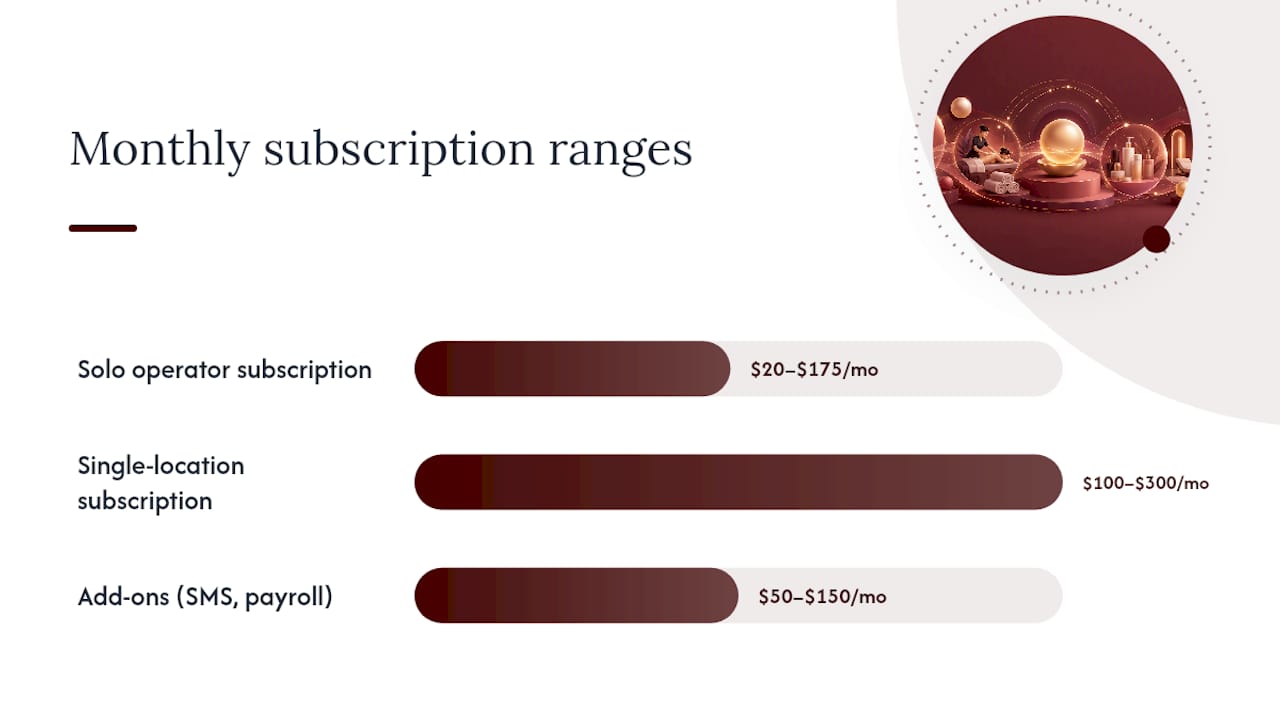
- Solo suite renter or single-chair operator: Budget $20–$175/month for subscription depending on platform; payment processing typically 2.6%–2.9% per transaction; onboarding is often self-serve at no additional cost for lower-tier platforms
- Single-location salon or spa (3–10 staff): Subscription $100–$300/month; add-ons (SMS marketing, advanced reporting, payroll) can add $50–$150/month; managed onboarding may cost a one-time fee or be bundled
- Multi-location operation (3+ locations): Enterprise pricing is typically quote-based; expect per-location fees, dedicated implementation support costs, and longer contracts
Pricing questions to ask every vendor before signing:
- What is the per-location fee, and does it change at 3, 5, or 10 locations?
- Are SMS/email marketing, advanced reporting, and payroll billed separately?
- Is there a fee to export your data if you leave?
- What is the renewal price increase policy?
Two quick scenarios to set expectations:
Scenario A — Solo suite renter switching from manual booking: A platform like Lumaripro or GlossGenius in the $24–$50/month range covers scheduling, financial tracking, and client management. Add payment processing fees and you’re looking at under $100/month total for a solo operator.
Scenario B — 5-location spa group switching from Zenoti: Enterprise platforms like Meevo or WellnessLiving require sales quotes. Budget for a one-time implementation fee, per-location monthly fees, and 4–8 weeks of onboarding time. Total first-year cost including migration and training can run significantly higher than the base subscription alone.
A common migration pattern worth knowing: businesses that start with single locations often choose low-cost or mobile-first platforms, then evaluate enterprise options only once they exceed 3–5 locations or need centralized inventory and reporting. Starting with a platform that fits your current scale is usually the right call.
When does Lumaripro make the most sense?
Lumaripro is the recommended alternative for suite renters and independent owners who need both a management platform and real business growth support. That’s a specific segment, and it’s worth being direct about it: if you’re running a 10-location spa chain, Lumaripro isn’t the right fit. If you’re a suite renter, booth renter, or independent beauty professional trying to build a sustainable business without a business partner or a boss, it’s built for exactly that situation.
The features that matter most for that audience:
- AI business coaching trained on suite ownership realities, covering pricing strategy, client retention, and booth rental economics
- Real-time financial dashboards that connect to your POS and QuickBooks, replacing spreadsheet guesswork with actual numbers
- Business playbooks for the specific decisions independent operators face: how to price services, how to retain clients, how to manage retail margins
- Expert-led coaching (group and 1:1) from people who understand the beauty industry, not generic business advice borrowed from other sectors
- Peer community of independent beauty professionals in similar situations
Three use cases where Lumaripro’s approach produces concrete results:
- Pricing discipline: An independent esthetician using Lumaripro’s pricing playbook and financial dashboard can see exactly which services are profitable and which are underpriced, then adjust without guessing.
- Cash flow clarity: A suite renter connecting their POS to Lumaripro’s dashboard gets a real-time view of revenue, expenses, and booth rental costs in one place instead of reconciling three separate tools.
- Client rebooking: The retention playbooks and coaching flows help independent operators build rebooking habits that reduce the feast-or-famine revenue cycle common in solo beauty businesses.
Onboarding timeline: Lumaripro is designed for operators moving from manual processes or basic tools. The platform’s onboarding is built around guided setup rather than a months-long implementation project. Most independent operators can be fully operational within days.
Pro Tip: When you start your Lumaripro onboarding, connect your QuickBooks account in the first session. The financial dashboard becomes significantly more useful once it’s pulling real data rather than showing you a blank slate.
What most comparison guides get wrong about switching software
Most Zenoti alternative roundups treat this as a feature-matching exercise. Find a platform with scheduling, POS, and client records, and you’re done. That framing misses the real problem for most operators, especially independent ones.
The platforms on this list are not interchangeable. The gap between a suite renter who needs pricing clarity and cash flow visibility and a 10-location spa group that needs centralized inventory and franchise reporting is enormous. A tool that solves one problem actively gets in the way of the other. Zenoti’s enterprise depth is genuinely valuable for large chains; it’s genuinely overkill for a solo operator, and that mismatch is what drives most of the switching decisions you’ll read about in reviews.
The other thing comparison guides underweight is the cost of the wrong choice. Switching platforms is expensive in time, not just money. You’re migrating client data, retraining staff, rebuilding automations, and absorbing a productivity dip during the transition. Doing that twice because you picked the wrong platform the first time is a real operational cost that doesn’t show up in any pricing table.
The practical implication: be more specific about what you actually need before you start demoing. A solo suite renter who needs financial clarity and business coaching is not the same buyer as a spa director who needs multi-location inventory controls. The right shortlist for one is the wrong shortlist for the other.
Lumaripro is the alternative built for how independent beauty businesses actually work
Most of the platforms on this list were built for salons with staff, front desks, and retail floors. Lumaripro was built for the operator who is the business: the suite renter, the booth renter, the independent esthetician or stylist who needs real financial clarity and business growth support, not just a booking calendar.
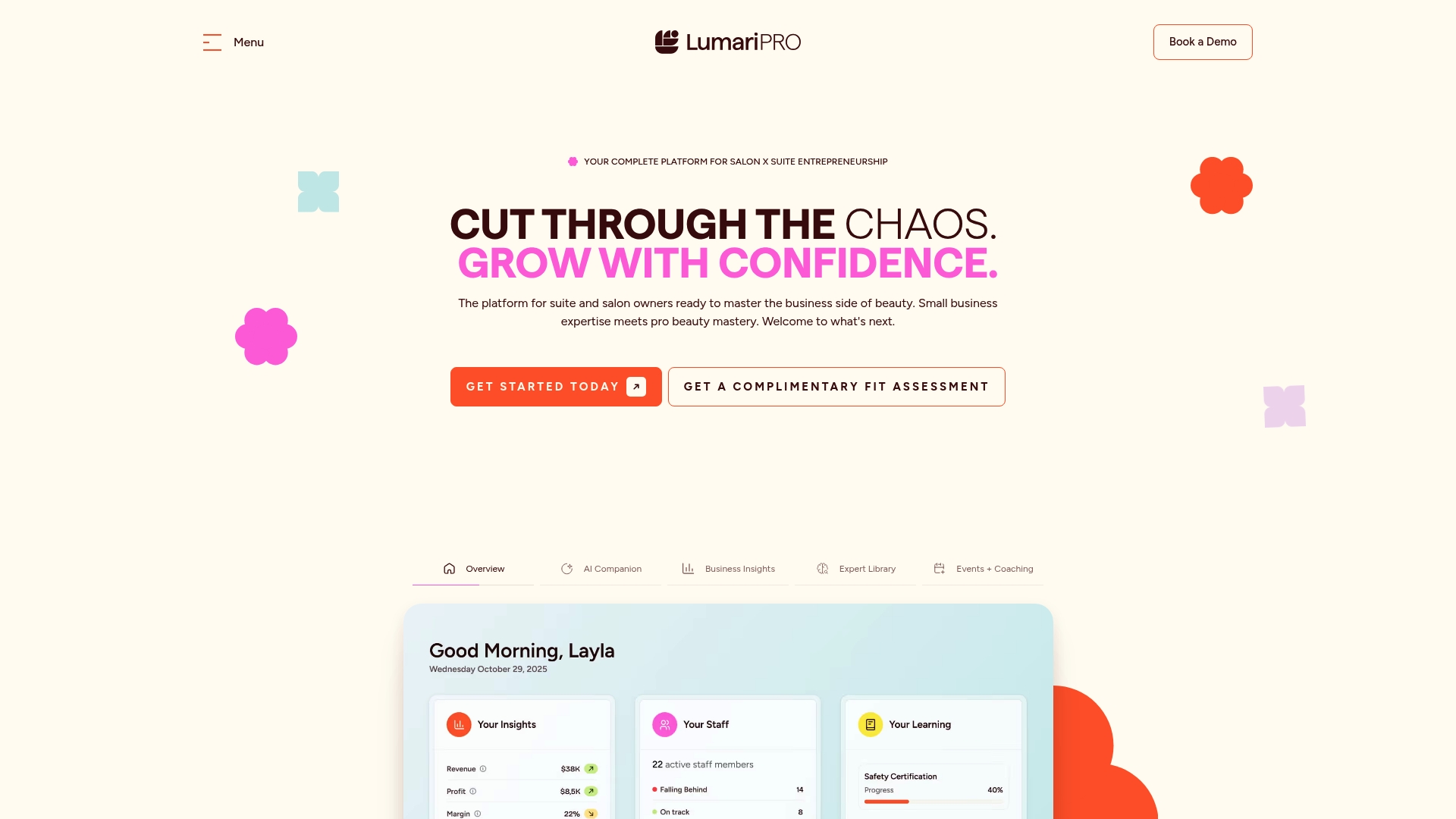
The concrete difference: while other platforms give you a dashboard and leave you to interpret it, Lumaripro connects your POS and QuickBooks to a real-time financial view and pairs it with AI coaching trained on suite ownership, business playbooks for pricing and retention, and expert-led coaching from people who understand the beauty industry. You get the tools and the guidance in one place, without needing a business partner or a consultant on retainer.
If you’re evaluating alternatives to Zenoti and you run an independent operation, the next step is straightforward: see how Lumaripro works and walk through the financial dashboard and AI coaching flow with your own numbers. You can also review current plan options before your first conversation.
Sources
The following sources were used in researching this comparison. Verify current pricing and features directly with each vendor, as rates and plans change.
- Zenoti vs Mindbody: Pricing, Features and Key Differences
- Zenoti Software competitors and alternatives (ITQlick)
- Top Zenoti Alternatives, Competitors (CB Insights company overview)
- 5 Top Zenoti Alternatives Worth Switching To in 2025
Recommended